
POLISCOPE

The public record

FLORIDA · STATEWIDEHeld · official record pendingPartial coverage

Senate in Special Session D

Wednesday, April 29, 2026 · Government meeting record

The 30-second read

Record incomplete

Senate in Special Session D

Why it matters

The official meeting record is available below. Item-level plain-language summaries are not available yet.

What happens next

The scheduled meeting date has passed. Minutes or an action agenda are not published in the records we hold.
This meeting date has passed and no official outcome record has been published yet. Nothing on this page is a decision.

People and votes

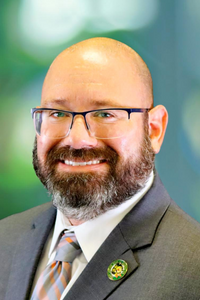
Brian Nathan

State Senator District 14

Open person dossier

The reviewed record lists this person as present but does not attribute a motion, statement, or individual vote to them.

Transcript and record text

Closed captionsWhat was said at the meeting, transcribed Sep 28, 2026. Speech is not a decision.
  • Some speaker identities remain unresolved.

The opening of 178,996 stored characters

>> The Senate will be in order. Good morning. The Senators and guests in the gallery, please rise for the opening prayer to be given by Dr. Doug Stoffer of Faith and Dependent Baptist Church in Niceville. Dr. Stoffer is sponsored by the Senator of the Second District, Senator Trumbull. Welcome, Pastor. >> Thank you. Let's pray. Heavenly Father, we come before thee acknowledging our weaknesses and human frailties. We confess that without thee, we can do nothing. Lord, we thank thee for the privilege of service in this great state of Florida. As these senators gather for this special session, we recognize the seriousness of the work before them, decisions that will shape representation and impact both this state and the nation. We pray for each senator, for President Albritton, for Governor DeSantis, and his cabinet. Grant, each of the state leaders wisdom beyond their expectations, discernment beyond political pressure, and courage beyond personal ambition. Help them to do what is right for Florida and what is right for this nation, give them clarity to act in a manner that preserves liberty, protects the voice of the people, and strengthens the foundations of this republic established 250 years ago. Empower them, Lord, not merely with authority, but with godly convictions. Remind them that leadership is not personal preeminence, but stewardship, not self-interest, but service to the people they represent. May they, like the founders of this nation, seek thy guidance and acknowledge thy hand in the affairs of this nation, give them reverence for truth, a respect for law, and a commitment to that which is right. Let the decisions made in this chamber align with the Constitution, and may their work be sound, just, and able to withstand examination by the courts. May the work accomplished in this special session bring stability, fairness, confidence to the people of Florida and serve as an example of principled governance to this nation. We commit this session, these leaders, and this state into thy hands, O Lord, in Jesus' name I pray, Amen. >> Amen, please remain standing for the pledge of allegiance to be led by Senator Burgess from his death. >> Pledge of allegiance to the flag of the United States of America and to the Republic for which it stands, one nation, one God, indivisible remit and justice for all. >> We'll now continue with the order of business. Are there reports of committees? >> None on the desk, Mr. President. >> Are there motions relating to committee reference? >> None on the desk, Mr. President. >> Are there messages from the governor or other executive communications? >> None on the desk, Mr. President. >> Are there messages from the House of Representatives? >> None on the desk, Mr. President. >> Are there matters on reconsideration? >> None on the desk. Mr. President. >> Take up the special order calendar. Read the first bill. >> Senate Bill 8D, a bill to be entitled In Act Establishing the Congressional Districts of the state. >> The senator of the First District, Senator Gaetz, you're recognized to explain the bill. >> Thank you, Mr. President. At 11:15 AM, Monday, I received an email from the governor's legal counsel containing Governor DeSantis's plan for congressional redistricting, and here we are two days later on the Senate floor, considering that plan. Some people say we should have had more notice, more time. And I feel that way, too. But of all the folks who came yesterday to the rules committee to protest the governor's proposal, I doubt any of them would have stayed at home if they had just had a few more days to think about it. The governor cut it close. He could have sent the email earlier, but he played by our Senate rules that prescribe the lead time for items to be presented to the rules committee. All I know about the governor's proposal is what those who came to the rules committee yesterday know, and that is what we learned from the governor's representatives. The governor's proposal is not unprecedented. There is no federal or state law prohibiting mid-decade congressional redistricting. In fact, Florida has done it four times before for various reasons. Seven states are redistricting now in the middle of a decade, some blue states, some red states. And in Florida, the governor has a constitutional role in congressional redistricting. He can propose a redistricting plan anytime mid-decade, as he has successfully done before. Some may not like that he can do that or that he is doing it, but he can do. In his letter of transmittal, the governor told us why. He gave us two reasons. First, to redress what he says is an imbalance, an illegal imbalance of one person or one vote. The governor argues that disproportionate surges in population in a state that is surging in population have left some voters with diminished electoral rights. And Mr. Poreda, representing the governor, says he has drawn maps to make those districts precisely equal and to redress those inequities. The second reason the governor gives for proposing this plan to us is that any district lines drawn with a racial preference are unconstitutional. So Mr. Poreda again, on the governor's behalf, has drawn districts which he says are race-neutral, taking no account of race whatsoever. The governors laid out his legal and his constitutional theory, plainly declaring that the Tier 1 racial preferences in the Fair Districts Amendment are, in the governor's view, unconstitutional and inconsistent with the 14th Amendment to the United States Constitution. I'm not here to prove his theory of constitutional law or to prove that it will prevail. That proof was offered in testimony yesterday by the governor's representatives and was explained by his legal counsel, and was questioned and debated by brilliant lawyers who are in this chamber. But it is the governor's prerogative to make his case. The governor has called us into special session to receive and to consider his congressional redistricting plan. And now it's ours. You vote it up or down. The governor has made his case. And, Mr. President, and I ask that the Senate thoughtfully and respectfully consider that case, and that is the bill. >> Are there amendments? >> None on the desk. Mr. President. >> Are there questions? Seeing none? No. Okay. Senator Rouson, any questions? You're recognized, sir. >> Thank you very much, Mr. President. And President Gaetz, in explaining this bill, you spent a lot of time talking about the process by which we received this bill and considered it. Do you recall in 2011, when you chaired the redistricting committee that some of us members who are sitting on this floor right now served on, and the number of public hearings we had so that the public could give adequate input? >> Senator Gaetz. >> Thank you, Mr. President. Thank you, Senator Rouson. I can show you the wound in my side. I can remember those days well. My recollection is, sir, that we had 26 public hearings around the state, and you were there for a number of them. >> Senator Rouson. Thank you very much, Mr. President. Did the public, in your opinion, get adequate time to research, analyze, and provide input to the map that we're considering today? >> Senator Gaetz. >> Thank you, Mr. President. I suspect that that's a matter of a personal view as to whether you believe that you had time or that any member of the public had time to review the map. The notion of congressional redistricting mid-decade is not a new notion, even though the map is presented to us just prior to this session, the debate and the discussion about congressional redistricting mid-decade has gone on for several months. I don't think it's news to anyone in Florida who is interested in the issue and follows the issue. >> Senator Rouson. >> Thank you very much, Mr. President. Isn't it a fact that as we stand here or sit here today, the current map is constitutional? >> Senator Gaetz. >> Thank you, Mr. President. I don't propose to opine on the constitutionality of any map. I would only say that the map that we have today is the law until it's changed. And I would suspect deferring to competent counsel present, that it's constitutional until some court says it's not. >> Senator Rouson. >> Thank you, Mr. President. Isn't it a fact that we're doing this proposed map on a signal from the Supreme Court that they might declare fair districts unconstitutional? >> Senator Gaetz? >> Thank you, Mr. President. I've received no signal from the United States Supreme Court. The only signal I received was at 11:15 in the morning. On 26 April, I received an email from the governor's legal counsel presenting the governor's proposal and a letter of transmittal. That is the only provocation that I know of for us being here today. There may be other influences about redistricting that are occurring around the country or in the minds of people in the state, but I've received no signal from the United States Supreme Court. >> Senator Rouson. >> Thank you very much, Mr. President. You were in committee yesterday when the governor's legal counsel indicated that they were doing this based upon signals that they had received from the court and assumptions that they were making. Is that correct? >> Senator Gaetz. >> Thank you, Mr. President. I heard the same comments that you did from the governor's legal counsel, and I certainly could not characterize those comments or embroider them in any way. They stand as they were stated. >> Additional questions. Senator Sharief in questions. >> Thank you, Senator Gaetz. Outside of a new census or court order, what objective event or legal necessity justifies altering the district lines that voters relied upon in the last election cycle? >> Senator Gaetz >> Thank you, Mr. President. There's no state law. There's no federal law that prohibits a mid-census or mid-decade redistricting. And so there does not need to be a particular provocation other than the governor's reasons that he gave, which were first to redress what he said was a one-person-one-vote imbalance caused by a disproportionate surge in population, and secondly, to deal with the governor described as an unconstitutional racial bias in Tier 1 of the Fair Districts Amendment. >> Senator Sharief. >> How does changing district boundaries mid-decade respect the expectations of voters who cast ballots under a different district structure and representation? >> Senator Gaetz. >> Thank you, Mr. President. With respect, Senator, could you please repeat the question? >> Senator Sharief. >> How does changing district boundaries mid-decade respect the expectations of voters who cast ballots under a different district structure and representation? >> Senator Gaetz. >> Thank you, Mr. President. If I understand the question, it occurs whenever we change district lines that voters find themselves in a different congressional district, or in the case of legislative redistricting, in a different House or Senate district ; their house didn't move, but the lines moved, and they find themselves in a different district, voting for perhaps different candidates than they did before. That's not a creature of this redistricting proposal, rather it occurs every time there's a redistricting, thousands if not hundreds of thousands of people in our state and in other states find themselves in different districts. >> Senator Sharief. >> So, in your opinion, does this proposal ensure that voters are not treated differently based on shifting district lines mid-cycle, particularly in light of the equal protection principles under the 14th Amendment? >> Senator Gaetz. >> Thank you, Mr. President. I cannot improve upon, nor would I try to characterize or defend the legal analysis provided by the governor's legal counsel in response to that question yesterday. >> Additional questions, Senator Sharief. >> So, if this is permissible today, what prevents it from becoming a standard practice tomorrow? >> Senator Gaetz. >> Thank you, Mr. President. The governor can propose a mid-decade redistricting, and the governor can provide a rationale for why he proposes it. It is then up to the legislature to determine whether or not it is timely and appropriate to do so, and that's why the governor can propose, but we must dispose, and that's why we're here on this floor today. >> Senator Sharief. >> So, in light of the statements that were made yesterday from the governor's staff in regards to taking into account partisan principles when redrawing these district maps, how can we ensure that all voters are respected and treated equally when these lines are redrawn for redistricting purposes? >> Senator Gaetz. Thank you, Mr. President. The governor's representatives indicated yesterday that they did not use partisan information in a way that was different from the usual fashion that redistricting is done and that functional analysis is done. But the way the safeguard, obviously, to make sure that people's rights are not violated is, if there are individuals who believe that the governor's plan, if it is adopted, violates any constitutional or legal stricture in our state or nationally, is to go to court. >> Additional questions, Senator Sharief. >> So basically, based on the polls that we have that come from my district in Broward County and the polls in Broward County in general, we know that there are a larger number of Caucasian Republicans than there are Black Republicans. And so when you say that you're using partisan data but not taking into consideration race, I challenge that principle. And so I want to know, do you have data different than what occurs in my county throughout the state that would make partisan data appropriate to be used versus race? >> Senator Gaetz. >> Thank you, Mr. President. I have no data other than the information that was provided to you and to me in the Rules Committee yesterday by the governor's representatives. >> Senator Sharief. >> President. >> Senator Smith, any questions? >> Thank you, Mr. President. President Gaetz, I appreciate your comments as you opened today's discussion specifically around how you're not here to prove or disprove the governor's office and their theories. But as you know President Gaetz, all of their theories are based on an assumption that the Supreme Court will rule in a certain way and that the way that they will rule will undermine the entire Fair Districts Amendment. My question for you is; and this is breaking news. We have just heard that the Supreme Court has dropped a decision on the Louisiana case. None of us have had the opportunity to read it or understand the full implications of this ruling. Do you believe that it's in the best interest of Florida voters and our Constitution to temporarily postpone this bill until we fully understand this ruling? >> Senator Gaetz. >> Thank you, Mr. President. That's certainly your prerogative. It is the prerogative of the legislature to postpone a consideration of this legislation if you will. My understanding as is your Senator, is that the Callais decision has been rendered by the Supreme Court. But also as we heard yesterday in the rules committee, it is the legal theory of the governor that the Callais decision no matter how it goes, does not by itself obviate the need for his proposal but rather that there are other legal cases that the governor's representatives quoted yesterday, which they believe provide sufficient legal justification for having race-neutral lines drawn. But I take your point that the Callais decision is one that could be studied and might have an effect on the vote that any individual senator might make today. >> Senator Smith, any questions? >> Thank you, Mr. President. I appreciate that authentic response in real time. If that's the case, I do believe it would be the responsible thing as a chamber for us to temporarily postpone this bill. I move that we temporarily postpone this bill. >> There's a motion on the floor. This is a voice vote. All those in favor of the motion signify by saying yay. >> Yay. >> All those opposed, no. >> No. >> No show the motion fails. Additional questions? I'm not waiting 30 minutes for you to fly five hands. You had two up when the motion was done and so we're moving on. Five hands. Let's go to the board. We'll open up the board. Clerk will unlock the board. All those prepared to vote on the motion. Clerk will lock the board and announce the vote. >> Twelve yays, 23 nays Mr. President. >> So the motion fails. Additional questions. Senator Smith, you have additional questions? I'm sorry. Hang on just a second. Senator Jones. >> Thank you, Mr. President. I don't think the intention was for us to go into that direction. >> I think what Senator Smith was trying to convey is to see if we as a body can pause for two seconds. Considering that this decision just came out, no one in this body has been able to read what the ruling was which pertains directly to what we're dealing with today. So Mr. President we're just asking if we can pause for two seconds so we can talk to our team, you all can talk to your team so we can make sure that we're asking the right questions for the Floridians who are watching this. That's all we're asking. >> Procedurally understood. We took up the motion and we voted and it was defeated and so we will continue on. Senator Smith, any question? >> Thank you, Mr. President. Excuse me. I'm just trying to collect and reassess my questions because I have a ruling in front of me that I have not read. So please forgive me in advance if any of these questions may be obsolete. We're just going to power through here. First, I want to start President Gaetz with the map as it impacts the district that I represent in Central Florida, Senate District 17. I've taken a look at the current Congressional District 9 which is a majority minority district that is compact and it provides a fair opportunity for the Hispanic population, the Puerto Rican population there to elect a representative of their choice and compliance with the Voting Rights Act. But when I compare it to the proposed Congressional District 9 in the map before us, I can clearly see that the new lines were drawn to split this compact, politically cohesive Latino population into four or five different congressional districts; CD9, CD10, 11, and 18. President Gaetz, do you believe it's legal for the legislature to approve a map that effectively eliminates Hispanic voting power in Central Florida and prevents them from electing the candidate of their choice? >> Senator Gaetz. >> Thank you, Mr. President. Senator, as I indicated before, I don't intend to nor would I have the credentials to opine legally on a question of the sort that you've described. I can only say that the governor's representatives as you saw yesterday in the rules committee presented a plan which they say does not take into account race in any way, shape, or form in the drawing of any lines, but rather deals with a surge in population and where that disproportionate surge exists in their mind based on EDR analysis. But I cannot opine obviously on a legal question of the sort that you've raised. >> Senator Smith. >> Thank you, Mr. President. And with deference and respect to you, President Gaetz, many of my questions are actually to you because of your experience. You actually chaired and led the redistricting effort for the Florida Senate in 2010. You gained a great deal of experience from that. I say that because I value your insights as more experienced than mine. So my question is specifically your understanding with that expertise, with the law as it currently stands, cracking the Latino population in this way, does that comply with the Federal Voting Rights Act and the Fair Districts Amendment? >> Senator Gaetz. >> Thank you, Mr. President. All I can tell you in response Senator, is that the governor's representatives and his legal counsel yesterday made the case which you can judge for yourself that their map does indeed comply with the Voting Rights Act and that their map complies with all federal legislation particularly with the 18th Amendment. They, the governor's representatives have made it clear that they believe that there is a conflict between some parts of the Fair Districts Amendment and the 18th Amendment to the Constitution. And so consequently they believe that in a case like that, the federal requirement or the federal statute would prevail in the case of any such conflict. >> Senator Smith. >> Thank you, Mr. President. Thank you, President Gaetz. So the same proposed Congressional District 9, it actually stretches north from my Senate District 17 in Orange County including the city of Belle Isle and the Orlando International Airport MCO; we all are familiar with that airport and Lake Nona. And then it goes down south all the way through Osceola County, Polk County, Highlands, Glades, and Okeechobee. PRESIDENT Gaetz, in your expertise, do you understand why this district is roughly 120 miles long from its northern and southern border stretching from Orlando as far south as where Rivera Beach currently is in Palm Beach County? Although it doesn't include Palm Beach County, it is as far south as Rivera Beach. >> Senator Gaetz. >> Thank you, Mr. President. If you say that it stretches 120 miles, I certainly would not dispute your statement. I have no particular opinion as to whether the construction of that district as proposed by the governor meets qualifications that you think it ought to meet. All I can tell you is that the compactness scores that the governor's representatives have provided indicate that their compactness scores are roughly the same as those of the underlying current map. I could not offer any additional information beyond what the governor's legal counsel and map drawer provided on the governor's behalf yesterday. >> Senator Smith. >> Thank you, Mr. President. Thank you, President Gaetz. Let me ask you a question about process. Of course I'm not a member of the Rules Committee, but I was there with you yesterday and tried to absorb as much of the comments as I could. I missed the very beginning. The governor's office made many claims that there was a race neutral nature of their map. They claimed that they drew it in a race neutral way and that that race was not considered in any way. Did they make any of these claims under oath? Were they required to make their statements under oath in front of the Senate Rules Committee sir? >> President Gaetz. >> Thank you, Mr. President. The governor's representatives were not placed under oath. >> Senator Smith, if you could just hang on one second. Appreciate that. Listen, considering the development that's happened here in the past few minutes, we're going to take a 30 minute break so that our colleagues can review the decision and adjust their questions that they would like. We're going to take a 30 minute break. We will be back here. Let's come back in at 11 o'clock. So we'll be on break. Senate will be in order. We're going to go back to questions. Leader Berman, you'll be first. You're recognized. >> Thank you, Mr. President. We've had quite the morning. So we do want to focus on the Callais decision. So my first question to you on the Callais decision is, are you aware that the Callais decision does not strike down Section 2 of the Voting Rights Act? >> President Gaetz. >> Thank you, Mr. President. Leader, I received at 11:19 AM this morning a transmittal from the general counsel to the governor and that transmittal goes to the question that you're asking. And with the president's permission and with your indulgence, Leader, I'll read this brief transmittal from the governor's legal counsel copies of which have already been transmitted to you both in writing and also electronically. And I read it. This is the governor's legal counsel; his words. "The court concluded that Louisiana's creation of an additional majority minority district to comply with federal courts construction of Section 2 of the Voting Rights Act was an unconstitutional racial gerrymander. Notwithstanding that the district was created for the purpose of complying with a court order, the Supreme Court held that the enactment, 'triggered strict scrutiny because the state's underlying goal was racial.' Intentional compliance with the court's demands constituted an express acknowledgment that race played a role in the drawing of district lines." The governor's Legal Counsel goes on to say, "Florida's intentional compliance with the FDA would constitute such an acknowledgment and therefore would require Florida 'to satisfy the extraordinarily onerous standard of proving that its use in race was narrowly tailored to further a compelling government interest.' As explained in my transmittal letter of April 27, Florida cannot do so. We therefore continue to urge you to enact the proposed congressional map transmitted therewith." David AxelmanGeneral, counsel to the governor. >> Leader Berman. >> Thank you, Mr. President. So does anything in what you just read state that the court is striking down Section 2 of the Voting Rights Act? >> President Gaetz. >> Thank you, Mr. President. Again, I'm not a lawyer. I'm reading from what the General Counsel has provided. And according to the information that we've received, the court has concluded that Louisiana's creation of an additional majority minority district to comply with a federal court construction of Section 2 of the Voting Rights Act was unconstitutional and a racial gerrymander. >> Leader Berman. >> Thank you, Mr. President. So I have a copy of the opinion in front of me. On the third page I guess of the opinion, the bottom of the second page, it says that they answered the question that compliance with Section 2 as properly constructed can provide such a reason. Are you disagreeing with the actual wording of the agreement of the opinion where it says that the Voting Rights Act can be used to provide an opinion that minority districts can be still upheld? >> President Gaetz. >> Thank you, Mr. President. My understanding Leader, is that what the court has said is that in order to justify a racially constructed district, there has to be a compelling record of egregious racial discrimination that immediately precedes and causes the construction of that district. And consequently, Leader, those conditions as far as I know and I'm not a lawyer, would not apply in the case of Florida or any Florida district that is under discussion. >> Leader Berman. >> Thank you, Mr. President. So I think you and I are somewhat saying the same thing and that is that you still under Callais can not discriminate against minorities in the redistricting process and that they are laying out what the requirements for strict scrutiny is in Callais. Would you agree with that? >> President Gaetz. >> Thank you, Mr. President. Again, I'm not a lawyer, but I would particularly agree with the second part of what you said, and that is that the court has said that there have to be certain conditions in existence in order to justify the creation of a district that's drawn with racial intent or racial lines. And those conditions are that there has to be an immediate record of egregious racial discrimination that precedes and provokes the necessity for the creation of that district. I don't believe that it goes further than that. That I believe is the black letter or the opinion. >> Leader Berman. >> This is very much the heart of a lot of what we're doing today so I want this to be as clear as we can on this issue. So are you aware that the Supreme Court in Callais held that the compliance with the Voting Rights Act can in fact be a compelling state interest? >> President Gaetz. >> Thank you, Mr. President. Yes. Under the strict scrutiny conditions that the court refers to, none of which apply in Florida. >> Senator Berman. >> Thank you, Mr. President. Does Senator President Gaetz, does any part of the Callais decision explicitly address the legality of Florida's Fair Districts Amendment? >> President Gaetz. >> Thank you, Mr. President. Again, not being an attorney, let me qualify what I'm about to say with that and say, not to my knowledge. To my knowledge, the Callais decision does not impact what we are attempting to do here on the floor of the Florida Senate, and it does not impact the governor's plan. In any negative way. >> Senator Berman. >> Thank you, Mr. President. But does it impact the actual words of our Florida Constitution under the Fair Districts, does it change the interpretation in any way of the Constitutional amendment? >> President Gaetz. >> Thank you, Mr. President. I think now you've asked me to go deep into legal analysis that's beyond my scope. I would simply say that the governor's legal counsel has rendered his opinion and his description of the effect of the Callais decision, which is to say that the Callais decision, if anything, sets a much higher standard for the creation of a district that is drawn with reference to racial lines, a much higher standard because of the preconditions necessary for that standard to be met, none of which apply in Florida. But beyond that, leader, I don't believe that I'm competent to go as deep into the legal nuances as your question would suggest. >> Senator Berman. >> Thank you, Mr. President. So interesting, you said, none of which apply in Florida. Have we actually done the deep dive that we normally do with redistricting, where we go around and look at maps and make decisions, or were we just given one map by the governor without the opportunity to really do a deep dive to show that there is no reason why we should have certain districts in Florida? >> President Gaetz. >> Thank you, Mr. President. No, we did not do a series of hearings around the state as we did in previous years, but I believe that if you or anyone else is suggesting that the conditions that would have to be precedent to the drawing of a district with racial lines exist in the state of Florida. And remember what the Supreme Court has said, there have to be an egregious record an immediately existent egregious record of racial discrimination that require the development or use of district lines drawn with racial intent. If you believe that to be the case or anyone else does, I believe you have the burden of proof. >> Senator Berman. >> Thank you, Mr. President. So is it your opinion, just want to clarify also. So, based on the Callais decision, are you of the opinion that we could have a statute in Florida that still says you can't discriminate based on partisanship? >> President Gaetz. >> Thank you, Mr. President. Yes, I believe so. And I believe so long as that statute was written and narrowly tailored in the way that the Supreme Court's decision has indicated, not the way that we commonly have used racial boundaries in redistricting in the State of Florida, but rather, if we would have to prove, someone would have to lay out the proof. And that proof, I think, is not existent, at least on the floor of the Senate today, and nowhere that I know of in the state of Florida, there would have to be a huge, weighty amount of proof in order to meet the Supreme Court's strict scrutiny standard. And if so, we ought to include that in Florida statutes. It's not there now. We'd have to rewrite the statute. >> Senator Berman. >> With respect to what you just said previously about that we haven't done the strict scrutiny to see if there should be a minority district, don't you think that should be handled on a court level also? >> President Gaetz. >> Thank you, Mr. President. I'm not an officer of the court, so that's beyond my competence to determine. My assumption as a layman and as a citizen is if there are lines drawn and districts created in violation of what the Supreme Court has said, and that is that in order for a racially drawn to be drawn with racial lines, that there has to be these serious, egregious conditions preceding. If you or anyone else believes that the district lines have been drawn in violation of now what the Supreme Court has said, and you bring a case in court, then obviously the courts would have an opportunity to decide the case. Yes, ma'am. >> Leader Berman? >> Thank you, Mr. President. So I do just want to go back to the Fair District Act, our Constitution and because this is so important. That still the provisions in the Fair District Act that apply to not doing maps in a partisan basis are still in effect after Callais. >> President Gaetz. >> Thank you, Mr. President. Again, I fear that you're asking me for a legal opinion that's beyond my competence. So let me refer you to what the governors council said in the rules committee. The Governors' Council said in response. Because race-based provisions in Article 3, Section 20 are inconsistent with federal law, the next question becomes, what about the rest of Article 3, Section 20 that has other things in it of the kind that you've described? The executive branch position on this is that the rest of Article 3, Section 20 cannot be saved. It is inseparable from the other provisions. As you will recall, Leader, we had a robust discussion in rules yesterday about severability, and I'm not sure that we came to a conclusion that entirely satisfied me. My own personal belief as a senator is that there are many aspects of fair districts, particularly all of the Tier 2 provisions, as well as not drawing districts where the entire intent and purpose of the district is to draw a district that has lines that would promote one political party or one candidate or another, that those aspects of fair districts ought to be saved. I would respectfully take that position as a member of the Senate. >> Further questions. Senator Smith. >> Thank you, Mr. President, and thank you, Mr. President Gaetz, for opining on that. I'm trying to square what you just mentioned to Leader Berman in my own assessment of the bill, because going back to my line of questioning before, I respect your experience and your leadership as someone who knows redistricting very well. So I don't want to belabor the point, but my question is, based on your opinion then, if you could make clear for the Senate, do you buy this argument that race-based requirements in the Fair Districts Amendment that they cannot be severed from other requirements in the Fair District Amendments, specifically as it relates to the current prohibition on partisan gerrymandering, which is the current law and the current constitution that we were sworn to uphold. >> Senator Gaetz. >> Thank you, Mr. President. As I attempted to explain to Leader Berman a moment ago, there was a lively discussion, and I think you were there. You observed it in the rules committee about this very topic. There were those in the room who appeared to take the position that there are aspects of fair districts that could be that are and ought to be, not necessarily thrown out or excluded. No matter what happens with federal court decisions, or no matter what happens with this bill that's before us. But the governor's counsel has said, the executive branch position is that the rest of Article 3, Section 20 cannot be saved, and it's inseparable. I believe that that's a topic for later construction by this legislature as speaking only as one senator, I believe, as I said to Leader Berman, there are aspects of fair districts that are different from that are separate issues from, drawing lines with racial intent, and that those separate parts of the Fair Districts Amendment should be and ought to be contained in Florida law. And as one senator, I would vote to do so. >> Senator Smith. >> Thank you, Mr. President. President Gaetz, so squaring that with what we all heard yesterday in the Rules Committee, you witnessed the same thing that I witnessed, but I just want to get some clarification. The governor's office yesterday did, in fact, openly admit that they did consider partisan criteria in drawing this map. Is that correct? >> Senator Gaetz. >> Thank you, Mr. President. Yes, the governor's office indicated that the map drawer, Mr. Poreda said on behalf of the governor, that political data was used along with all other data. He stated in the Rules Committee yesterday that it was not the dominant or controlling data that was used, but it was used. >> Senator Smith. >> Thank you, Mr. President. Thank you. And yesterday, from my perspective, they made a lot of stunning assertions. Do you agree with the governor's office's repeated assertions yesterday in the rules committee that the legislature "doesn't need to comply with any provisions of the Fair Districts Amendment." You just said, President Gaetz, that it is a topic worthy of the consideration at a future date. But with all due respect, aren't we considering it right now with this map that does admittedly include partisan considerations? >> Senator Gaetz. >> Thank you, Mr. President. With respect, Senator, no. First of all, I was not stunned. And secondly, I believe that the governor's position is one which has been clear, and that is that the governor does not believe that racial preference should be any part of the drawing of any line. For the last two years, I've sat in this chamber, and I've listened to bill after bill, amendment after amendment, speech after speech about how we ought to be treating people in the state of Florida based on their merit, on the quality of their character, on what they do, not on the color of their skin. And the governor has taken the position, in my view, that that is the case in drawing lines for congressional districts, just as it is in other matters. And so, consequently, I'm not troubled by that position on behalf of the governor. I believe that we can pass these maps, and we can still have a belief that some of us in the room may believe that there are aspects of fair districts that still ought to be included in Florida law. And in answer to a question that I asked the governor's legal counsel yesterday, I said, do you need to win that point? Do you need to win the point that all of fair districts has to go in order for you to prevail in your legal theory? And the answer to that question, I think, was, no not really. >> Senator Smith. >> Thank you, Mr. President. I'm also not an attorney, President Gaetz, I just play one on the Florida channel. My question for you is, do you believe that by passing a map that admittedly was drawn using partisan consideration in current violation of the Fair Districts amendment to Florida's Constitution, that would be a violation of the oath that we all took to uphold and defend Florida's current constitution as it is currently written? >> Senator Gaetz. >> Thank you, Mr. President. There's an assumption in your question. And the assumption is that it would be proven that the use of partisan data was a controlling factor in the drawing of those lines by the governor's map drawer. I think that would have to be proven in court. And if it were proven in court, then obviously, it would be illegal in my judgment as a lawyer based upon the law in Florida as it exists now. But that would have to be proven in court. There is no proof that I've heard or seen in the presentation made in the rules committee yesterday or in any discussion or debate on the floor today, that the lines that were drawn by the governor's map drawer were drawn with a controlling interest in partisan gerrymandering. >> Senator Smith. >> Thank you, Mr. President. Thank you for the clarification, President Gaetz. I want to ask you about this language, which is new language to me as it relates to Article 3 Section 20A of the Constitution that somehow the Florida Constitution only bans considering partisan interests in map drawing if it's some sort of prevailing or predominant consideration. That's new information to me. I have the Constitution in front of me, and it says, no apportionment plan or individual district shall be drawn with the intent to favor or disfavor a political party or an incumbent. I didn't read anywhere in there anything about a predominant motivation or interest. I just read you the black and white text. Doesn't the Constitution say we can't consider partisan interest at all? >> Senator Gaetz. >> Thank you, Mr. President. No, I don't think that what you read said we can't consider partisan interest at all. I think what you read said that the lines cannot be drawn "with the intent." And I think then, and again, you and I are not lawyers, Senator, but I would guess that very sharp litigators would be determining and parsing through what the intent means. Does it mean that that is the controlling intent? Does it mean that that is what occurred, or does that mean it was one of 15 different data points that was used? This is beyond my competence, Senator, I'm not a lawyer, but my guess is that if the ones you're raising is a ripe issue, and I daresay it may be that that'll be decided in court. >> Senator Smith. >> Thank you, Mr. President. >> So I appreciate the fact that you continue to say that a court needs to decide. We don't have a court order here. We just have black and white texts of the Constitution that tells us what the law is. This chamber has repeatedly undergone intentional years long efforts to engage in redistricting in a way that does not consider partisanship because we have respected the Constitution. Suddenly, this new notion that, maybe we just can consider it after all and let the court decide, is something that's new to me. Help me understand. Are we simply to ignore our constitutional oath just because we're persuaded by an argument today, even if we don't have a court order that tells us that we can ignore the Constitution. >> Senator Gaetz. >> Thank you, Mr. President. No, with all respect, Senator, I don't believe that we are being asked to violate our oath, nor do I believe that we are in a different world with respect to the use of partisan data than the world in which we have lived for the last 15 or 20 years in redistricting. Partisan data has always been a part or a subtext of redistricting that has occurred, either in terms of its use among the many data points that go into redistricting. Or the criticism that might be made afterwards, having to do with the effect of redistricting. But I do not believe we've entered into any new troublesome era in which the maps that the governor's office has presented to us are drawn with any more partisan domination than any maps that we've seen in the past. >> Senator Smith. >> Thank you, Mr. President. President Gaetz, I heard you this morning and yesterday when you described your role in this, which is, of course, as the chair of the Senate Ethics and Elections Committee, you were respectfully asked to file the bill, and you believe the governor, I'm paraphrasing, of course, is constitutionally entitled to be able to present a map, and we're just doing him the courtesy of considering that map that he has given us. My question for you is, while he has that authority, as you have described, what is the urgent need for the Florida Senate to adopt this map? Don't we also have the constitutional authority as an institution to consider this map and just reject it? >> Senator Gaetz. >> Thank you, Mr. President. Yes. >> Senator Smith. >> >> Thank you, Mr. President. What is the urgency behind adopting this congressional map in particular, especially in the context of a new court decision where we do not have an updated staff analysis that helps us fully understand all of the implications of the ruling? What is the urgency, Mr. President? >> Senator Gaetz. >> Thank you, Mr. President. The governor's legal counsel said in the rules committee yesterday, and I quote, "The governor's stated reasons for redrawing the congressional plan now are twofold. One, it's to account for the greater population growth between 2020 and 2025 in the suburban and ex urban communities throughout the state. And two, it is to ensure that the state has a race neutral congressional plan." >> Senator Smith. >> Thank you, Mr. President. Of course, it's not a secret that it is my strong belief that the actual intention for this redrawing is partisan favor for the majority party. But has the governor called on the Florida legislature to redraw our state Senate maps and our state House maps since we have had a population change? And all of the things that he asserted also apply to our legislative maps. >> Senator Gaetz. >> Thank you very much, Mr. President. No. And the reason is because the governor has a constitutional prerogative with respect to congressional maps, and the governor has no constitutional prerogative with respect to state Senate or state House maps. >> Senator Smith. >> Thank you, Mr. President. I want to make sure, for the record, no one gets it twisted, I am not advocating for us to redraw our state Senate or state House maps. Just wanted to put that out there. However, if the legislature believes in the governor's argument that we must urgently redraw these congressional maps for the stated reasons that you just described, doesn't that rationale also apply to our legislative maps? >> Senator Gaetz. >> Thank you, Mr. President. I've not been provided with a rationale, an argument, or a plan that would support such a contention. >> Senator Smith. >> Thank you, Mr. President. On process, was the map drawn by the map makers that we heard from by hand or did they use any outside algorithms that you're aware, Mr. President? >> Senator Gaetz. >> Thank you, Mr. President. Yesterday the map drawer, Mr. Poreda, was asked and answered on behalf of the governor that he drew the map himself, that it was map that was drawn in iterations, and that no one else drew the map. He drew every single line, although he consulted with legal counsel and other members of the executive office of the governor. >> Senator Smith. >> Thank you, Mr. President. Thank you, President Gaetz. I know that the mapmaker we heard from is very talented. He's very experienced. He knows very well what he's doing. Did any alternate maps for us to consider. And if he didn't, why didn't he give us a menu of options to choose from? >> Senator Gaetz. >> Thank you, Mr. President. The governor's office and the governor's representatives did not present any map or any proposal other than the one that was transmitted to me, which I, in turn, had transmitted to the entire Senate, which is before you now. >> Senator Smith. >> Thank you, Mr. President, and thank you, President Gaetz. And I understand that you received the transmittal of the governor's map and you've not been involved in the process. I fully understand that, and I think the timestamp was 11:15 AM yesterday morning. However, President Gaetz, do you have any personal knowledge of any other map that was drafted by the governor's office recently that was shared with members of the legislature? >> Senator Gaetz. >> Thank you, Mr. President. I have had no contact with anyone in the governor's office about congressional redistricting. The only communication that has occurred has been the communication that occurred electronically, which I, in turn, shared, through the president, with all members of the Senate. I've had no other contact with anybody in the governor's office about any map drawing of any kind. >> Senator Smith. >> Thank you, Mr. President. President Gaetz, can you help us understand why this specific map, this version and no other version was selected by the governor's office and transmitted to you at 11:15 AM on Monday. >> Senator Gaetz. >> Thank you, Mr. President. All I can do is repeat what the governor's representative said, and that is that they believed that the product that they provided on behalf of the governor met the standards that were necessary for congressional redistricting and met the governor's two objectives. And that was to take into account population surges, and also, to ensure that there would be no lines drawn with racial intent. Beyond that, I certainly can't comment on what else the governor's office may have done or thought about. >> Senator Smith. >> Thank you, Mr. President. I know that, very famously, the governor first shared this map with Fox News before it was shared with the office of the Senate president and before it was shared with your office, President Gaetz. And the map that was shared with Fox News is not what was transmitted to us. It was a color coded red and blue map to detail how red performing this map is. Are you aware of any other map that maybe has been provided to the Senate or that has been provided to other media outlets that shows us where the incumbent members of Congress in Florida live in these districts and whether any of them were drawn out of their districts? >> Senator Gaetz. >> Thank you, Mr. President. Let me repeat what I said before Senator, and that is, I have no knowledge of any map or any map drawing or any work in drawing maps, other than what was transmitted to me, which I, in turn, through the president, hand transmitted to all members of the Senate. So therefore, the answer to your question is, no. >> Senator Smith. >> Thank you, President Gaetz. >> Additional questions? Senator Polsky. >> Thank you, Mr. President. Just one more question on the severability so we can be totally clear. Are you aware that the non severability argument has not been adopted by any court? >> Senator Gaetz. >> Thank you, Mr. President. I am not aware of any courts action with respect to severability as to this matter. >> Senator Polsky. >> Thank you, Mr. President. You mentioned just before that the governor said one of the reasons for making this map are population surges. What data are those population surges based on, and how were they used to create this map? >> Senator Gaetz. >> Thank you, Mr. President. Senator, I can refer to Mr. Poreda on behalf of the governor and his comments at the Rules Committee yesterday, and I believe that his comments are responsive to your question. Mr. Poreda said that the Office of Economic Research and Demographic Research, through the use of the American Community Survey, which is a rolling sample provided by the US Census Bureau, where they sample 1-3% of the US population every year, was used by the map drawers in the creation of their map. The governor's representative went on to say that based upon that analysis, Florida gained approximately 9% of our population over the last five years, 9% increase over five years, which translates to just over 1.8 million people on top of what we already had in 2020. >> Senator Polsky. >> Thank you. I've heard it said by various people that Florida was gypped in the last census, meaning that we should have had one more additional congressional seat. Obviously, this map does not do that. It changes the formation of the map within our 28 congressional seats. So how does this population data rearrange the citizens so that they are more fairly distributed? >> Senator Gaetz. >> Thank you, Mr. President. Senator Polsky, you're exactly right, and that is that the governor's proposal does not provide for an additional congressional seat for the state of Florida. That's beyond the purview and jurisdiction of the governor and the legislature of the state of Florida. That's a determination based on the census and the census showing, in the division of 435 members of Congress, how many members of Congress would be assigned to each state. And there are those who believe that we should have had an additional member of Congress assigned to us based on the 2020 census. I'm not a demographer, and so consequently, I don't have an opinion about that. Obviously, as a citizen, it would be nice if Florida had more representatives in Congress, but I believe that that has to be the function of the census, not a function of my opinion. >> Senator Polsky. >> Thank you. But how does the data that you referred to before affect how these districts have been changed by this map? In other words, what does it have to do with dividing the city of Tampa into three sections? What does the data have to do with making a sea from Palm Beach County from the Atlantic Ocean to the Gulf of Mexico? How does that happen? Where is that data to prove that those districts are more correctly distributed? >> Senator Gaetz. >> Thank you, Mr. President. The representatives of the governor have indicated that the maps that they have presented to us are based on the 2020 census, and they also have used information from the Office of Economic and Demographic Research through the American Community Survey, which is a rolling sample by the US Census Bureau. And as provided to us by Mr. Poreda at the Rules Committee, yesterday, Mr. Poreda said, "The changing populations are based on EDRs estimate. We cannot assign them to census blocks or equalized population based on those estimates, but," and these are his words, on behalf of the governor, "We can certainly know which counties are growing faster than others, which counties are growing, faster than the state average or slower than the state average, and then account for those in the orientation of the district so that those populations can be accounted for." >> Senator Polsky. >> Thank you, Mr. President. So the census that was initiated by Trump in 2020 and was monitored by this current governor between 2020 and 2022, to create the map that he gave us in 2022, based on that census data, he believes now five years later or six years later is incorrect; is that true? >> Senator Gaetz. >> Thank you, Mr. President. With respect, Senator Polsky, I don't believe that President Trump initiated this 2020 census. I think the 2020 census was going to occur no matter who is president of the United States. And secondly, what the governor's representatives have said is that since 2020, there has been a 9% increase in the population of the state of Florida, that's 1.8 million more people, and that that constitutes with EDR's analysis of that research and which counties are growing, which counties are groing faster than other counties. That provides them the basis then for making the Map determinations that they have made. >> Senator Polsky. >> Thank you, Mr. President. So that additional 1.8 million people, first of all, we weren't supposed to use partisan data, but if we are, and he admitted to that, are they all Republican? Why is the map so red, especially the one that was sent to Fox News? >> Senator Gaetz. >> Thank you, Mr. President. In my dreams, they would all be Republicans, but I don't believe that that is the case. The map that was sent to Fox was not sent by me. When we asked the governor's representatives and the Rules Committee yesterday where that map came from that was sent to Fox, they said they didn't know. They said they didn't send it. And therefore, I only know what they said with respect to what they said they didn't do. All I can tell you is that I had nothing to do with sending a map to Fox. Let me go, however, one step further. It is not unprecedented that chief executives when they are auditioning a new public policy, go to the public or go to the media before they go to the legislative body. This occurs with Presidents of the United States, with governors, with mayors that chief executives will say, this is what I'm thinking about doing, and they audition it through leaks to the media or through actual presentations to the media or actual tours around the state or tours around the country saying, this is what I'm about to do. And then they submit the bill. That happens. >> And I know that we would like, as legislators, to be the very first ones who are told what the governor or the president or the mayor want to do. And we perhaps get our noses out of joints, speaking only for myself if I'm not the first one to be told. The fact is that chief executives do that all the time. I have no idea how Fox News got that map. But regardless of how they got that map, it is certainly within the governor's prerogative to audition his public policy initiatives in any way he wants to, and then come with a piece of legislation to the Florida legislature. >> Senator Polsky. >> Thank you. That actually wasn't my question. I just was pointing out how the map turned out. So if population growth is neutral as far as registration goes, why does this map that this governor put out or only map that we can consider, why does it favor Republicans so much and so out of sync with voter registration numbers, which should have given Democrats even potentially more seats than they currently have based on registration numbers? >> Senator Gaetz. >> Thank you, Mr. President. Senator Polsky, and I say this most respectfully, I didn't draw the map. I didn't draw the map that was colored red. I didn't see that until it was on Fox News. And so I have no idea why it was done that way or what the intent was if there was an intent. And so therefore, I can't improve upon my answer to that question. >> Senator Polsky. >> Thank you, Mr. President. I'm not asking about the map that was sent to Fox News. I'm asking about the map that we are voting on before us. If it is supposed to be a change from the map that this governor gave us in 2022, because of certain population growth, that's the justification. Why is it so out of sync with our voter registration numbers? >> Senator Gaetz. >> Thank you, Mr. President. I don't know that it is. The 1.8 million new people who moved to Florida in the last five years, I don't know what their voter registration is. I suspect that information could be obtained. I don't know the answer to that question. And so therefore, I don't know why, other than some sort of an analysis that you or anyone else might conclude that that gives Republicans an advantage or a disadvantage. I'm not sure that it does. I'm not sure that this map necessarily gives Republicans an advantage. >> Senator Polsky. >> Thank you, Mr. President. If you believe and the governor's office believes that this map does not violate the Fair District's Amendment that was passed overwhelmingly by the voters, what would be an example of something that would violate the Fair District's Amendment? >> Senator Gaetz. >> Thank you, Mr. President. What I believe is probably inconsequential to this debate, what the governor believes, and I'm quoting from the governor's legal counsel in his remarks to the Rules Committee yesterday, "Because race-based provisions on Article 3, Section 20 are inconsistent with federal law, the next question becomes, what about the rest of Article 3, Section 20? The executive branch position on this is that the rest of Article 3, Section 20 cannot be saved. It is inseverable from the other provisions." We've talked about severability. If you're asking me as a layman, what violation of the Fair Districts or what action with respect to the Fair Districts Amendment could be considered a violation, other than using race as a dominant reason for drawing lines? Obviously, it would be creating districts that look like Rorschach blots on the map, which has occurred sometimes in the past in Florida and in other states. I believe there was a lack of compactness, but that would be a reason why the Third DCs Circuit's Amendment, assuming part of it could still be retained in law, and I believe it can be, might be violated. And that's why I'm comforted by the governor's map draw, indicating that in the compactness scoring, the compactness scoring for the maps presented by the governor is the same in compactness as the underlying map that we have right now. >> Senator Polsky. >> Thank you, Mr. President. With respect to compactness, I'm thinking of a district that was drawn that goes from Miami through Broward up to Palm Beach along the coast. That has not been the current state

Meeting record textSenate in Special Session D

Skip to Navigation | Skip to Main Content | Skip to Site Map

FLHouse.gov | Mobile Site

Senate Tracker: Sign Up | Login

Go to Bill:

Session:

2026F

2026E

2026D

2026

2025

2025C

2025B

2025A

2024 Org.

2024

2023C

2023

2023B

2022A

2022 Org.

2022D

2022C

2022

2021B

2021A

2021

2020 Org.

2020

2019 I

2019

2018 Org.

2018

2017A

2017

2016 Org.

2016

2015C

2015B

2015A

2015

Official record

ArtifactSourceState
AgendaNot published in the sources we holdunavailable
Agenda packetNot published in the sources we holdunavailable
Budget documentNot published in the sources we holdunavailable
Action agendaNot published in the sources we holdunavailable
MinutesNot published in the sources we holdunavailable
Transcript or captionsSource recordingread transcript
AttachmentNot published in the sources we holdunavailable

Coverage and corrections

Records considered

  • Senate in Special Session D

Not claimed by this page

  • Verified meeting decisions with item-specific public-source evidence
  • Item-level plain-language summaries are not available; this page does not infer individual agenda items.
  • Item-linked, attributed deliberation
  • A source-grounded next meeting date
  • A plain-English overview is not available.
  • Official outcomes have not been published.
  • Transcript coverage is partial.
  • Named people and places have not been reliably resolved.
  • An individual roll-call roster is not available.

No source correction or revision history is recorded for this meeting. A corrected artifact will appear here as a new version rather than replacing what is shown above.

Canonical record: 3a45f0befb2735c67fc47a19bcbecba5. This page changes as stronger artifacts are published; it never overwrites an agenda with minutes.

Publisher tools

Share or embed this record

POLISCOPE publisher tools

Share or embed this record