
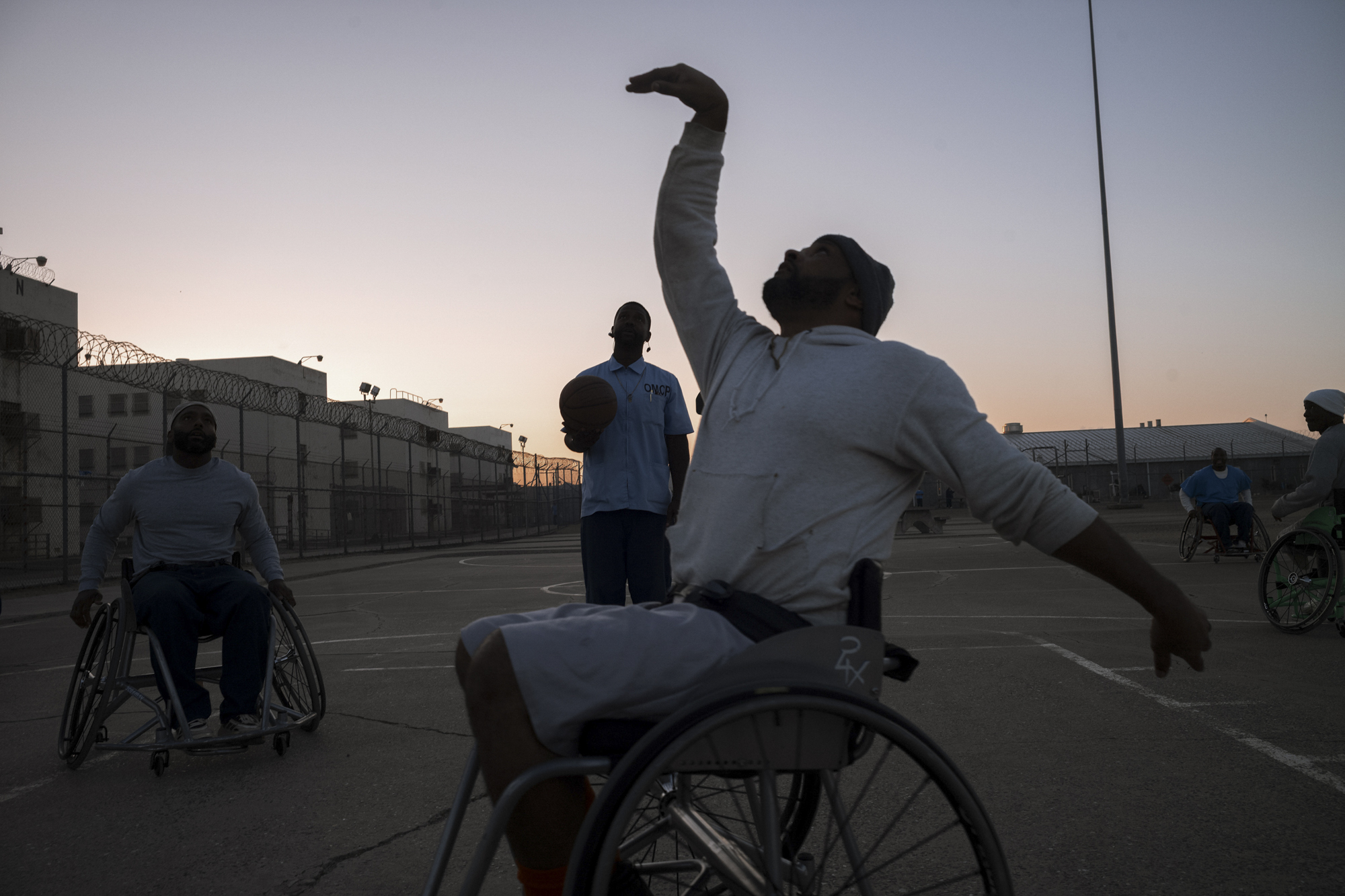
In Prison, Wheelchair Basketball Offers a Chance at Reinvention
Photo: KQED News
At the California Medical Facility, incarcerated men with and without physical disabilities participate in a wheelchair basketball program designed to foster rehabilitation, personal growth, and conflict resolution. The program integrates inside and outside coaches, allowing able-bodied players and wheelchair users to train together and build community. Meanwhile, California is expanding sports programming statewide following the signing of the Second Chance Sports Act by Gov. Gavin Newsom.
Read the full story at KQED NewsWhy It Matters
Incarcerated participants in organized sports programs in California can earn credits toward early release under recent state legislation, while local prison recreation initiatives provide structured personal development and conflict management tools.
Key Facts
- Gov. Gavin Newsom signed the Second Chance Sports Act on Sept. 30, directing the state prison system to expand sports programming and allowing participants to earn credits toward early release.
- The California Medical Facility hosts a wheelchair basketball program that integrates able-bodied incarcerated men and men with physical disabilities.
- The program is led by a combination of incarcerated 'inside' coaches, such as Larry Roach, and 'outside' coaches, including Paralympian Joe Chambers and head coach Mieko Chambers.
- The program was created by Jeremiah Holland, the facility's former recreation supervisor, to foster personal accountability, character growth, and conflict resolution.
- Incarcerated participants manage team check-ins, establish codes of conduct, and hold peers accountable for inappropriate behavior during practice.
- Participation in the program helped former player Landon Jackson build a record of personal change, leading to a warden's letter of support and his subsequent release.
- Able-bodied players participate in wheelchairs to build empathy and honor individuals with physical disabilities.
- The reporting was published in partnership with CatchLight, KQED, and CalMatters as part of a three-year Mental Health Visual Desk Reporting Initiative.