
The civic record
Read. Follow. Verify.Louisiana restricts state fire marshal oversight of day care centers and standardizes safety requirements
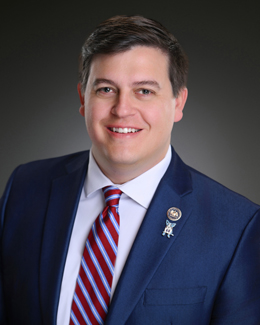
Last action · May 15, 2026: Effective date: 08/01/2026.Sponsor: Dixon McMakin
Track this bill to get notified when it advances a stage. One tap to stop, anytime.
What This Bill Does
Louisiana limits the state fire marshal to enforcing only expressly adopted life safety codes for early learning and child day care centers, requiring proportionality to facility size and risk. The law prohibits requiring commercial ventilation for standard residential appliances like microwaves and coffee makers unless explicitly mandated by code, and stays all enforcement actions and penalties during an administrative appeal.
Day care operators gain the explicit right to appeal fire marshal decisions to the division of administrative law within fifteen days while pausing all fines, closures, and penalties until the appeal is resolved.
Who It Affects
Groups the bill's text affects, as described in the record. Being affected is not a position for or against it.
early learning centers and child day care centers
Facilities are subject to standardized, risk-proportional fire safety inspections, must receive written code citations for violations, and gain formal appeal rights with automatic stays on penalties.
state fire marshal
The agency is restricted from imposing rules outside adopted codes, must justify requirements with specific code citations, and bears the burden of proof during administrative appeals.
Key Facts
- The state fire marshal remains responsible for safety inspections of institutional occupancies, including early learning centers and child day care centers.
- The fire marshal is strictly prohibited from imposing additional requirements through policy, guidance, or interpretation beyond officially adopted state or federal fire and life safety codes.
- Any fire safety requirement imposed on a day care center must be proportional to the facility's size, occupancy, and risk level.
- Standard residential appliances such as microwaves and coffee makers do not require commercial ventilation or fire suppression systems unless explicitly mandated by applicable code.
Show all 8 facts
- The fire marshal must provide written notice of any violation or corrective action, including citations to specific applicable code provisions.
- Persons aggrieved by a fire marshal determination may appeal to the division of administrative law within fifteen days of receiving written notice.
- All enforcement actions, including fines, penalties, and closures, are automatically stayed pending the final disposition of an appeal.
- The state fire marshal bears the burden of proving that any contested requirement is expressly authorized by adopted state or federal codes.
Frequently Asked Questions
Does a day care center need commercial ventilation to use a microwave or coffee maker?
What happens to fines or closure orders if a day care center appeals a fire marshal's decision?
How long does a day care facility have to appeal a determination by the fire marshal?
What else do you want to know?
News Coverage
Follow the record
Votes, people, money & the original sourceWhere This Stands
Current status: Signed into law.
Procedural history
20 actions- May 15, 2026HouseEnrolledSigned by the Governor. Becomes Act No. 166.
- May 15, 2026HouseEffective date: 08/01/2026.
- May 14, 2026SenateEnrolledSigned by the President of the Senate.
- May 14, 2026HouseSent to the Governor for executive approval.
- May 13, 2026HouseReceived from the Senate without amendments.
- May 13, 2026HouseEnrolledEnrolled and signed by the Speaker of the House.
Show 14 earlier actions
- May 12, 2026SenateFloorRules suspended. Read by title, passed by a vote of 32 yeas and 0 nays, and ordered returned to the House. Motion to reconsider tabled.
- May 4, 2026SenateFloorReported without Legislative Bureau amendments. Read by title and passed to third reading and final passage.
- Apr 29, 2026SenateIntroducedRead by title and referred to the Legislative Bureau.
- Apr 28, 2026SenateCommitteeReported favorably.
- Apr 14, 2026SenateCommitteeRead second time by title and referred to the Committee on Commerce, Consumer Protection and International Affairs.
- Apr 13, 2026HouseFloorRead third time by title, roll called on final passage, yeas 96, nays 0. Finally passed, title adopted, ordered to the Senate.
- Apr 13, 2026SenateReceived in the Senate. Read first time by title and placed on the Calendar for a second reading.
- Apr 9, 2026HouseScheduled for floor debate on 04/13/2026.
- Apr 8, 2026HouseFloorRead by title, amended, ordered engrossed, passed to 3rd reading.
- Apr 7, 2026HouseReported with amendments (16-0).
- Mar 9, 2026HouseIntroducedRead by title, under the rules, referred to the Committee on Commerce.
- Feb 27, 2026HouseFirst appeared in the Interim Calendar on 2/27/2026.
- Feb 26, 2026HousePrefiled.
- Feb 26, 2026HouseCommitteeUnder the rules, provisionally referred to the Committee on Commerce.
Version history
Only one version on file - nothing to compare yet. As later stages (committee substitute, engrossed, enrolled) are captured, the redline appears here.
View official text →Lobbying Activity
No state lobbying filings in our records match this bill. Federal lobbying reports (LDA) cover Congress, so they are not listed on state bills.
Full breakdown
Who this bill affects and the strongest case for and against it, written only from the bill’s own text.
Sponsors
Connected Entities
Sources
www.legis.la.gov
Analysis Score
0–100- Significance60How much this matters to a regular citizen
- Controversy15Intensity of disagreement among stakeholders
- Entertainment5Compellingness for a non-policy-wonk reader
- Buzz20Current news / social attention level
Publisher tools