
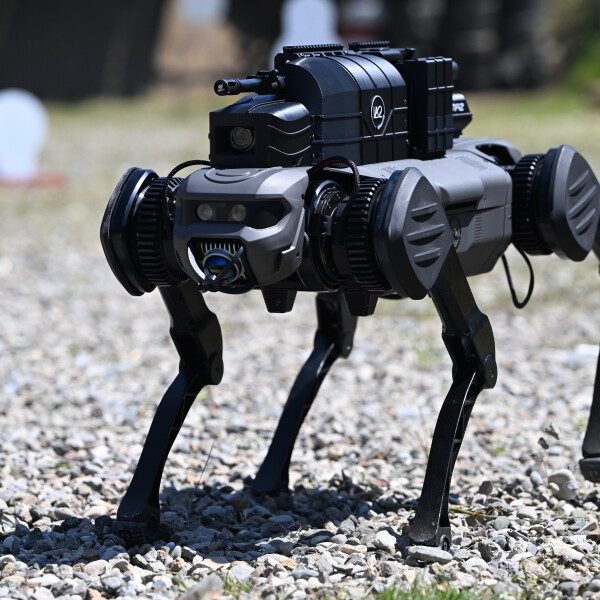
U.N. talks in Geneva extend discussions on AI weapons for two years without binding rules
Photo: KPBS Public Media
Nations participating in a U.N.-backed conference in Geneva agreed to extend discussions on lethal autonomous weapons systems for two more years, setting a goal to elaborate a possible accord by 2028 rather than adopting binding rules this year. The outcome followed opposition from major military powers against setting firm restrictions on AI-powered killer robots and drones. The conference operated under a consensus rule within the Convention on Certain Conventional Weapons.
Read the full story at KPBS Public MediaWhy It Matters
The decision leaves the development and deployment of autonomous military technology without binding international restrictions for at least another two years, affecting global military capabilities and humanitarian safety standards across 128 ratifying countries.
Key Facts
- U.N.-backed talks in Geneva produced an agreement to extend discussions on lethal autonomous weapons systems for two more years.
- Participating countries agreed to elaborate a possible accord on AI weapons systems by 2028.
- The conference did not commit to binding rules sought by U.N. Secretary-General António Guterres and various activists.
- Seven countries (Brazil, Austria, Belgium, Ireland, Mexico, New Zealand, and Panama) proposed launching negotiations on a rulebook before the meeting, but the effort fell short.
- Advocacy groups and officials noted that major military powers like Russia and the United States obstructed stronger language to maintain flexibility in developing high-tech weapons.
- Talks centered on the Convention on Certain Conventional Weapons, which has been ratified by 128 countries.
- Decisions under the Convention on Certain Conventional Weapons are made by consensus, allowing any single country to thwart an agreement.
- Armed drones capable of independently striking targets have already been deployed in select instances within conflict zones, according to activists.