
NewsABC Action News (WFTS) — NewsAugust 5, 2026Hillsborough County
National Science Foundation telescope captures highest-resolution images of the sun's surface
Photo: ABC Action News (WFTS) — News
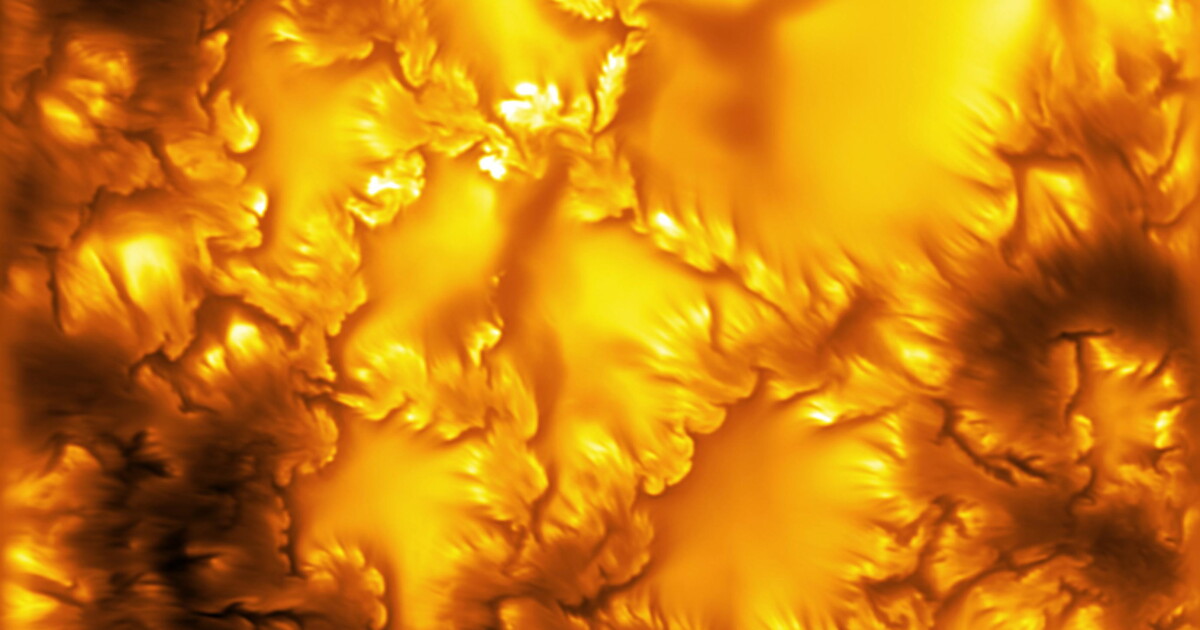
Researchers using the Daniel K. Inouye Solar Telescope in Hawaii have produced the most detailed images of the sun's surface to date. The images reveal previously unobserved rippling patterns of magnetized plasma, providing new insights into solar activity that can impact Earth's communications.
Read the full story at ABC Action News (WFTS) — NewsWhy It Matters
Understanding solar surface dynamics helps scientists better predict s, which can cause solar storms that disrupt GPS and satellite communications on Earth.
Key Facts
- The Daniel K. Inouye Solar Telescope in Maui captured the highest-resolution images of the sun's surface to date.
- Researchers observed feathery, rippling patterns on the sun's surface caused by magnetized plasma moving at different speeds.
- The phenomenon observed is similar to waves created by wind blowing over water, a process known to guide fluid movement.
- These specific ripples have been observed on Earth, Jupiter, and Saturn, but never before at this resolution on the sun.
- The findings were published on Wednesday in the journal Nature.
- The images were originally taken to test the telescope's capabilities rather than for specific solar research.
- Studying these solar dynamics helps track coronal mass ejections that can cause solar storms on Earth.
- Solar storms have the potential to scramble GPS communications and create auroras.
Who's Mentioned
PersonRuizhu Chen“Solar physicist at Stanford University.”otherNature“Scientific journal where findings were published.”OrganizationAssociated Press“News organization reporting the findings.”PersonFriedrich Wöger“Study co-author with the National Solar Observatory.”otherDaniel K. Inouye Solar Telescope“Telescope located in Maui, Hawaii used to capture the images.”OrganizationNational Science Foundation“Operates the Daniel K. Inouye Solar Telescope.”