
The civic record
Read. Follow. Verify.Louisiana consolidates parole eligibility criteria for juvenile offenders serving life sentences
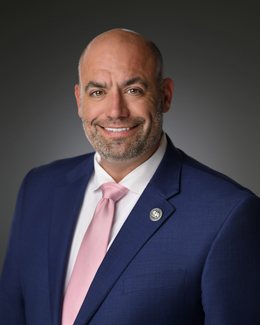
Last action · May 29, 2026: Effective date: 08/01/2026.Sponsor: Bryan Fontenot
Track this bill to get notified when it advances a stage. One tap to stop, anytime.
What This Bill Does
Louisiana lawmakers enacted House Bill 280 to streamline and consolidate repetitive language regarding parole eligibility requirements for individuals who were under the age of eighteen at the time of their offense or sentenced as young adults. The measure standardizes conditions across various subsections of state law, such as completing educational programs, maintaining clean disciplinary records, and obtaining low-risk designations.
Clarifies the statutory requirements that juvenile and young adult offenders serving life sentences must meet to qualify for parole consideration, affecting incarcerated individuals, the Department of Public Safety and Corrections, and the board reviewing parole applications.
- House Bill 280 was introduced during the 2026 Regular Session of the Louisiana Legislature by Representative Bryan Fontenot and was signed into law as Act 425. context
Who It Affects
Groups the bill's text affects, as described in the record. Being affected is not a position for or against it.
juvenile offenders
Incarcerated individuals sentenced as juveniles or young adults must navigate the consolidated statutory criteria to determine their parole eligibility.
Department of Public Safety and Corrections
The department oversees risk assessments, disciplinary records, substance abuse treatment, and pre-release programming required for parole consideration.
Key Facts
- Amends and reenacts R.S. 15:574.4(B)(2), (D)(1), (E)(1), (F)(1), (G)(1), and (J)(1) to remove duplicative language regarding parole qualifications.
- Applies to individuals serving life sentences who were under the age of eighteen or between certain age brackets at the time of their offense.
- Maintains requirements for offenders to serve a specified portion of their sentence—ranging from ten to twenty-five years depending on age at sentencing—before becoming eligible for parole consideration.
- Requires offenders to obtain a low risk level designation via a validated risk assessment instrument approved by the secretary of the Department of Public Safety and Corrections.
Show all 6 facts
- Requires that offenders commit no major disciplinary offenses (Schedule B offenses) in the thirty-six consecutive months prior to their parole hearing date.
- Mandates completion of at least one hundred hours of pre-release programming, substance abuse treatment if applicable, and educational milestones such as a literacy program, adult basic education, job skills training, or a high school equivalency certificate.
Frequently Asked Questions
What does House Bill 280 change?
Does this bill eliminate the requirement for offenders to complete educational or risk assessment programs?
What else do you want to know?
News Coverage
Follow the record
Votes, people, money & the original sourceWhere This Stands
Current status: Signed into law.
Procedural history
22 actions- May 29, 2026HouseEnrolledSigned by the Governor. Becomes Act No. 425.
- May 29, 2026HouseEffective date: 08/01/2026.
- May 21, 2026HouseSent to the Governor for executive approval.
- May 20, 2026HouseReceived from the Senate without amendments.
- May 20, 2026HouseEnrolledEnrolled and signed by the Speaker of the House.
- May 20, 2026SenateEnrolledSigned by the President of the Senate.
Show 16 earlier actions
- May 19, 2026SenateRules suspended. Called from the Calendar.
- May 19, 2026SenateFloorRead by title, passed by a vote of 33 yeas and 0 nays, and ordered returned to the House. Motion to reconsider tabled.
- May 5, 2026SenateIntroducedRead by title and returned to the Calendar, subject to call.
- Apr 27, 2026SenateFloorReported without Legislative Bureau amendments. Read by title and passed to third reading and final passage.
- Apr 22, 2026SenateIntroducedRead by title and referred to the Legislative Bureau.
- Apr 21, 2026SenateCommitteeReported favorably.
- Apr 13, 2026SenateCommitteeRead second time by title and referred to the Committee on Judiciary C.
- Apr 8, 2026HouseFloorRead third time by title, roll called on final passage, yeas 93, nays 0. Finally passed, title adopted, ordered to the Senate.
- Apr 8, 2026SenateReceived in the Senate. Read first time by title and placed on the Calendar for a second reading.
- Apr 7, 2026HouseScheduled for floor debate on 04/08/2026.
- Apr 1, 2026HouseFloorRead by title, ordered engrossed, passed to 3rd reading.
- Mar 31, 2026HouseCommitteeReported favorably (7-0).
- Mar 9, 2026HouseIntroducedRead by title, under the rules, referred to the Committee on Administration of Criminal Justice.
- Feb 27, 2026HouseFirst appeared in the Interim Calendar on 2/27/2026.
- Feb 23, 2026HousePrefiled.
- Feb 23, 2026HouseCommitteeUnder the rules, provisionally referred to the Committee on Administration of Criminal Justice.
Version history
Only one version on file - nothing to compare yet. As later stages (committee substitute, engrossed, enrolled) are captured, the redline appears here.
View official text →Lobbying Activity
No state lobbying filings in our records match this bill. Federal lobbying reports (LDA) cover Congress, so they are not listed on state bills.
Full breakdown
Who this bill affects and the strongest case for and against it, written only from the bill’s own text.
Sponsors
Discoveries
Patterns POLISCOPE noticed across the record. These are observations to investigate, not conclusions.
Statutory Streamlining in Criminal Code
The legislature systematically targeted repetitive language across subsections B, D, E, F, G, and J of R.S. 15:574.4 to unify parole standards.
Connected Entities
Sources
www.legis.la.gov
Analysis Score
0–100- Significance60How much this matters to a regular citizen
- Controversy25Intensity of disagreement among stakeholders
- Entertainment5Compellingness for a non-policy-wonk reader
- Buzz20Current news / social attention level
Publisher tools