
NewsKPBS Public MediaSeptember 11, 2026San Diego County
KPBS News Article: How the 9/11 attacks changed life in uniform
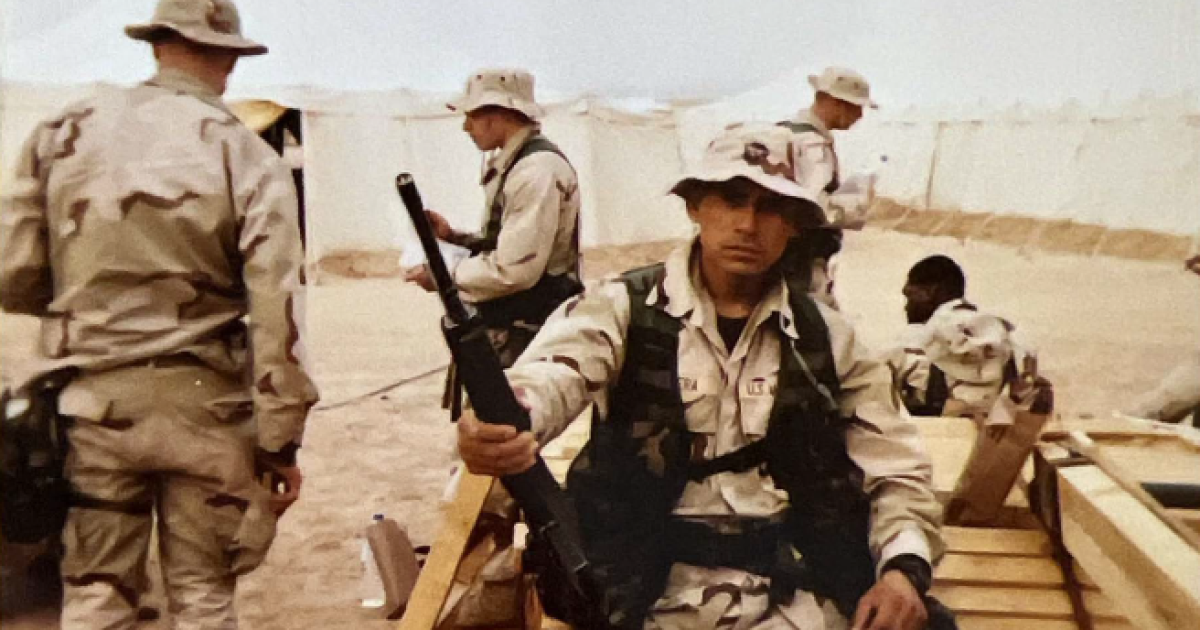
Photo: KPBS Public Media
This news article examines how the September 11 terrorist attacks transformed military service over the past 25 years, shifting the U.S. armed forces from a peacetime all-volunteer force to one characterized by continuous combat. Through the perspective of Marine Corps Sergeant Major Hector Rivera, the article traces the impact of deployments in Iraq and Afghanistan, the 2021 Kabul evacuation, and the ongoing evolution of military strategy.
Read the full story at KPBS Public MediaWhy It Matters
The article highlights the long-term human and strategic impacts of post-9/11 conflicts on generations of U.S. service members and military families.
Key Facts
- Hector Rivera was in the Marines less than a year and finishing motor transport school at Fort Leonard Wood when the Sept. 11, 2001 attacks occurred.
- The U.S. military has engaged in constant combat operations for the 25 years following the 9/11 attacks, transforming service life compared to the post-Vietnam era.
- The Pentagon suspended mandatory conscription in 1973, making the U.S. military an all-volunteer force.
- Rivera completed six combat deployments in less than 20 years, including two to Iraq and three to Afghanistan.
- In August 2021, Rivera's unit was sent to help secure the Hamid Karzai International Airport (HKIA) in Kabul during the U.S. evacuation.
- U.S. forces helped evacuate more than 120,000 Afghans from Kabul during the summer of 2021.
- An August 2021 suicide bombing at HKIA's Abbey Gate killed more than 160 Afghans and 13 U.S. service members, including 10 from Rivera's battalion.
- A nonprofit report from #AfghanEvac noted that hundreds of thousands of Afghans eligible for U.S. resettlement remain unable to apply due to travel and visa bans enacted by President Donald Trump.
- Following the Afghanistan withdrawal, military planners refocused long-term strategy toward near-peer and pacing threats such as Russia and China, investing heavily in unmanned vehicles and artificial intelligence.
Who's Mentioned
locationChina“Identified by the Pentagon as a near-peer and pacing threat country.”PersonHector Rivera“Marine Corps Sergeant Major who served six combat deployments starting around 9/”locationRussia“Identified by the Pentagon as a near-peer and pacing threat country.”locationCamp Lejuene“Marine base in North Carolina.”OrganizationUSS Abraham Lincoln“San Diego-based Navy ship.”locationFort Leonard Wood“Location in Missouri where Rivera finished motor transport school on Sept. 11, 2”PersonDonald Trump“Former U.S. President associated with visa bans affecting Afghan resettlement.”locationHamid Karzai International Airport“Airport in Kabul secured during the 2021 evacuation.”locationCamp Pendleton“Marine Corps base in California where Rivera serves as battalion sergeant major.”locationAfghanistan“Site of combat operations and the 2021 evacuation.”locationKuwait“Deployment location in 2021 for the Special Purpose Marine Air-Ground Task Force”OrganizationTaliban“Resurgent force that retook control of Afghanistan in 2021.”locationIraq“Site of combat operations during Iraqi Freedom.”OrganizationU.S. military“Engaged in constant combat operations for the 25 years following 9/11.”Organization#AfghanEvac“Nonprofit that issued an August report regarding eligible Afghan refugees.”