
The civic record
Read. Follow. Verify.Louisiana extends financial benefits to surviving spouses of reserve law enforcement officers killed in the line of duty
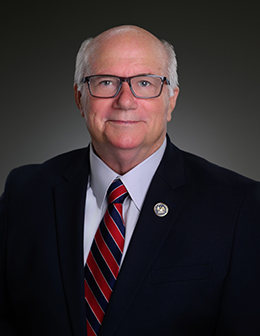
Last action · June 2, 2026: Effective date: 08/01/2026.Sponsors: Debbie Villio and 30 others
Track this bill to get notified when it advances a stage. One tap to stop, anytime.
What This Bill Does
Louisiana law now guarantees surviving spouses and children of commissioned, reserve, or auxiliary law enforcement officers killed in the line of duty are eligible for financial security payments if the death occurs while traveling to or from an emergency, a public safety response, or their authorized work area in an agency vehicle.
Qualifying surviving spouses and children of reserve or auxiliary officers newly become eligible for state financial security payments when a fatal incident occurs during specific transit or emergency response conditions, carrying an estimated state general fund expenditure impact of $250,000.
- House Bill 12 was introduced during the 2026 Regular Session of the Louisiana Legislature and signed into law as Act 608 by the Governor. context
Who It Affects
Groups the bill's text affects, as described in the record. Being affected is not a position for or against it.
reserve and auxiliary law enforcement officers
Their surviving spouses and children become explicitly eligible for financial security payments if the officer is killed while traveling to emergencies or commuting in agency vehicles.
surviving spouse or child of a law enforcement officer
They gain entitlement to statutory line-of-duty death benefit payments under expanded service and travel conditions.
Key Facts
- Act 608 amends R.S. 40:1665.2(F) to extend survival benefits to reserve and auxiliary law enforcement officers.
- Surviving spouses or children of commissioned reserve or auxiliary officers killed in the line of duty are entitled to payments provided in Paragraph (C)(1) of the statute.
- Eligibility applies if the officer was traveling to or from a public safety emergency or responding to a public safety, health, or welfare assistance request.
- Eligibility also applies if the officer was traveling between their residence and authorized work area using an employing agency's law enforcement vehicle.
Show all 6 facts
- The measure carries an estimated state general fund expenditure increase of $250,000.
- The designated effective date for the statutory change is August 1, 2026.
Frequently Asked Questions
Who is newly covered under the updated surviving spouse benefit law?
What travel conditions qualify a reserve officer's family for benefits under this Act?
What else do you want to know?
News Coverage
Follow the record
Votes, people, money & the original sourceWhere This Stands
Current status: Signed into law.
Procedural history
20 actions- Jun 2, 2026HouseEnrolledSigned by the Governor. Becomes Act No. 608.
- Jun 2, 2026HouseEffective date: 08/01/2026.
- May 27, 2026SenateEnrolledSigned by the President of the Senate.
- May 27, 2026HouseSent to the Governor for executive approval.
- May 26, 2026HouseReceived from the Senate without amendments.
- May 26, 2026HouseEnrolledEnrolled and signed by the Speaker of the House.
Show 14 earlier actions
- May 25, 2026SenateFloorRules suspended. Read by title, passed by a vote of 38 yeas and 0 nays, and ordered returned to the House. Motion to reconsider tabled.
- May 20, 2026SenateFloorReported without Legislative Bureau amendments. Read by title and passed to third reading and final passage.
- May 19, 2026SenateIntroducedRead by title and referred to the Legislative Bureau.
- May 18, 2026SenateCommitteeReported favorably.
- Apr 28, 2026SenateCommitteeRead second time by title and referred to the Committee on Finance.
- Apr 27, 2026HouseFloorRead third time by title, roll called on final passage, yeas 102, nays 0. Finally passed, title adopted, ordered to the Senate.
- Apr 27, 2026SenateReceived in the Senate. Read first time by title and placed on the Calendar for a second reading.
- Apr 23, 2026HouseScheduled for floor debate on 04/27/2026.
- Apr 22, 2026HouseFloorRead by title, ordered engrossed, passed to 3rd reading.
- Apr 21, 2026HouseCommitteeReported favorably (15-0).
- Mar 9, 2026HouseIntroducedRead by title, under the rules, referred to the Committee on Appropriations.
- Jan 23, 2026HouseFirst appeared in the Interim Calendar on 1/23/2026.
- Jan 16, 2026HousePrefiled.
- Jan 16, 2026HouseCommitteeUnder the rules, provisionally referred to the Committee on Appropriations.
Version history
Only one version on file - nothing to compare yet. As later stages (committee substitute, engrossed, enrolled) are captured, the redline appears here.
View official text →Lobbying Activity
No state lobbying filings in our records match this bill. Federal lobbying reports (LDA) cover Congress, so they are not listed on state bills.
Full breakdown
Who this bill affects and the strongest case for and against it, written only from the bill’s own text.
Sponsors


Show 26 more sponsors






Discoveries
Patterns POLISCOPE noticed across the record. These are observations to investigate, not conclusions.
State Fiscal Impact Identified
The enrolled bill explicitly notes an estimated expenditure increase of $250,000 from the state general fund.
Sources
www.legis.la.gov
Analysis Score
0–100- Significance60How much this matters to a regular citizen
- Controversy10Intensity of disagreement among stakeholders
- Entertainment5Compellingness for a non-policy-wonk reader
- Buzz25Current news / social attention level
Publisher tools