POLISCOPE
Back to bills
Part ofCourts →

The civic record

Read. Follow. Verify.
Enacted

Ohio Revises Competency Restoration Timelines for Defendants in Criminal Cases

Original title: Regards the timeline for restoring competency in criminal cases

Last action · February 20, 2026: Signed By The GovernorSponsors: Nathan H. Manning and 30 others

Introduced
Committee
Floor Vote
Passed
Law

Track this bill to get notified when it advances a stage. One tap to stop, anytime.

Public stanceCommunity reactions are separate from the official record and reporting.

What This Bill Does

Ohio Senate Bill 295 changes the maximum time limits allowed for restoring a criminal defendant's , extending the period for the most serious offenses such as aggravated murder to three years while adjusting timelines for other felony and misdemeanor cases, and takes effect immediately as an emergency measure.

Why it matters

The law alters how long individuals accused of crimes can be committed to state psychiatric facilities for competency restoration treatment before charges must be dismissed or proceedings initiated.

Who It Affects

Groups the bill's text affects, as described in the record. Being affected is not a position for or against it.

Directly affected

Criminal defendants found incompetent to stand trial

Defendants face extended maximum periods of court-ordered psychiatric treatment and confinement for competency restoration depending on the severity of the charged offense.

Directly affected

Department of Mental Health and Addiction Services

The department is responsible for providing or overseeing treatment facilities and submitting required progress reports to trial courts regarding committed individuals.

Directly affected

County prosecutors

Prosecutors receive notices regarding defendant movements, discharges, or changes in commitment status and retain burdens of proof at continued commitment hearings.

Key Facts

You don't have to trust us. Each fact below is taken straight from the official document - click any one to see the exact passage, highlighted in the original.

Frequently Asked Questions

What is the new maximum timeline for restoring competency in a murder case?
The maximum timeline for competency restoration treatment is extended to three years if the most serious charge is aggravated murder, murder, or an offense of violence carrying a death or life sentence.
Does this law apply to defendants whose cases are already pending?
Yes, the amendments apply retroactively to all defendants found incompetent to stand trial prior to the effective date whose competency restoration is ongoing or whose case remains pending.
What happens if a defendant refuses to take prescribed medication during restoration?
The statutory time period for competency treatment is (paused) during any period when the defendant lacks capacity to consent or refuses treatment, or while a petition for involuntary medication is pending.

What else do you want to know?

News Coverage

No news coverage found yet. Articles are indexed twice daily.

Where This Stands

Current status: Signed into law.

Procedural history

12 actions
  1. Feb 20, 2026Enrolled
    Signed By The Governor
  2. Feb 20, 2026Enrolled
    Effective Emergency Act
  3. Feb 18, 2026HouseCommittee
    Reported - Amended (Judiciary)
  4. Feb 18, 2026HouseFloor
    Passed
  5. Feb 18, 2026SenateFloor
    Concurred in House amendments
  6. Feb 18, 2026Enrolled
    Sent To The Governor
Show 6 earlier actions
  1. Nov 19, 2025HouseCommittee
    Referred to Judiciary
  2. Nov 18, 2025HouseIntroduced
    Introduced
  3. Nov 12, 2025SenateCommittee
    Reported - Amended (Judiciary)
  4. Nov 12, 2025SenateFloor
    Passed
  5. Oct 22, 2025SenateCommittee
    Referred to Judiciary
  6. Oct 21, 2025SenateIntroduced
    Introduced

Version history & redline

6 versions on file
Comparing As Passed by the House → As Enrolled
removed addedOfficial text
removed: sb295_04_PH As Passed by the House 136th General Assembly Regular Session Am. S. B. No. 295 2025-2026 Senators Manning, Patton Cosponsors: Senators Cirino, Gavarone, Reineke, Romanchuk, Schaffer, Smith Representatives Mathews, A., Abrams, Brennan, Click, Demetriou, Fischer, Hall, D., Hall, T., Hiner, John, Manning, Mathews, T., Miller, J., Mullins, Odioso, Plummer, Stewart, Thomas, D., Thomas, J., Troy, Williams, Willis, Young To amend sections 2945.38, 2945.39, and 2945.401 of the Revised Code relative to the timeline for restoration of competency in criminal cases and to declare an emergency. BE IT ENACTED BY THE GENERAL ASSEMBLY OF THE STATE OF OHIO: Section 1. That sections 2945.38, 2945.39, and 2945.401 of the Revised Code be amended to read as follows: Sec. 2945.38. (A) If the issue of a defendant's competence to stand trial is raised and if the court, upon conducting the hearing provided for in section 2945.37 of the Revised Code, finds that the defendant is competent to stand trial, the defendant shall be proceeded against as provided by law. If the court finds the defendant competent to stand trial and the defendant is receiving psychotropic drugs or other medication, the court may authorize the continued administration of the drugs or medication or other appropriate treatment in order to maintain the defendant's competence to stand trial, unless the defendant's attending physician advises the court against continuation of the drugs, other medication, or treatment. (B)(1)(a)(i) If the defendant has been charged with a felony offense or a misdemeanor offense of violence for which the prosecutor has not recommended the procedures under division (B)(1)(a)(vi) of this section and if, after taking into consideration all relevant reports, information, and other evidence, the court finds that the defendant is incompetent to stand trial and that there is a substantial probability that the defendant will become competent to stand trial within one year 55,854 more removed characters - read the previous versionadded: sb295_05_EN (136th General Assembly) (Amended Senate Bill Number 295) AN ACT To amend sections 2945.38, 2945.39, and 2945.401 of the Revised Code relative to the timeline for restoration of competency in criminal cases and to declare an emergency. Be it enacted by the General Assembly of the State of Ohio: Section 1. That sections 2945.38, 2945.39, and 2945.401 of the Revised Code be amended to read as follows: Sec. 2945.38. (A) If the issue of a defendant's competence to stand trial is raised and if the court, upon conducting the hearing provided for in section 2945.37 of the Revised Code, finds that the defendant is competent to stand trial, the defendant shall be proceeded against as provided by law. If the court finds the defendant competent to stand trial and the defendant is receiving psychotropic drugs or other medication, the court may authorize the continued administration of the drugs or medication or other appropriate treatment in order to maintain the defendant's competence to stand trial, unless the defendant's attending physician advises the court against continuation of the drugs, other medication, or treatment. (B)(1)(a)(i) If the defendant has been charged with a felony offense or a misdemeanor offense of violence for which the prosecutor has not recommended the procedures under division (B)(1)(a)(vi) of this section and if, after taking into consideration all relevant reports, information, and other evidence, the court finds that the defendant is incompetent to stand trial and that there is a substantial probability that the defendant will become competent to stand trial within one year the time specified in division (C) of this section if the defendant is provided with a course of treatment, the court shall order the defendant to undergo treatment. (ii) If the defendant has been charged with a felony offense and if, after taking into consideration all relevant reports, information, and other evidence, the court finds that the defendant 56,047 more added characters - read this version
Redline computed from the official version text (record lane).View this version →

Voting Record

Show 4 earlier roll calls

Lobbying Activity

No state lobbying filings in our records match this bill. Federal lobbying reports (LDA) cover Congress, so they are not listed on state bills.

Full breakdown

Who this bill affects and the strongest case for and against it, written only from the bill’s own text.

Sponsors

Show 26 more sponsors

Discoveries

1 pattern noticed across the record

Patterns POLISCOPE noticed across the record. These are observations to investigate, not conclusions.

policy shift99% confidence

Retroactive Extension of Competency Timelines

The General Assembly explicitly applied the expanded three-year restoration window retroactively to all pending cases, directly addressing expiring timelines on active court dockets.

Connected Entities

Nathan H. Manning, General Assembly, Mark Hiner and 10 more
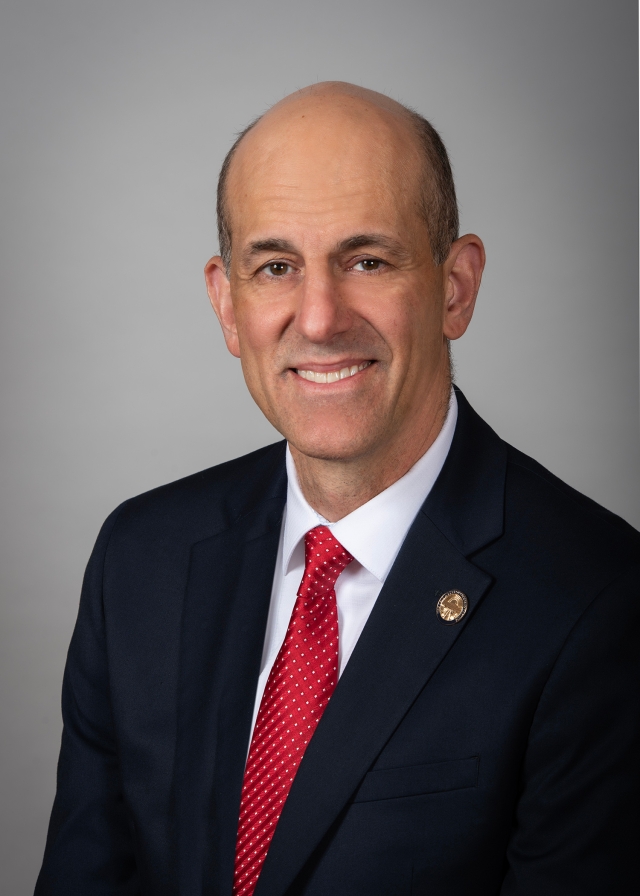
PersonNathan H. Manning“State Senator, District 13”Map →
OrganizationGeneral Assembly“Legislative body enacting the bill”Map →
PersonMark Hiner“Cosponsor of the legislation”Map →
PersonGary Click“Cosponsor of the legislation”Map →
PersonTex Fischer“Cosponsor of the legislation”Map →
PersonThomas Patton“State Senator, District 24”Map →
PersonGayle Manning“Cosponsor of the legislation”Map →
PersonMarilyn John“Cosponsor of the legislation”Map →
PersonSean Brennan“Cosponsor of the legislation”Map →
PersonCindy Abrams“Cosponsor of the legislation”Map →
PersonSteve Demetriou“Cosponsor of the legislation”Map →
PersonDerrick Hall“Cosponsor of the legislation”Map →
PersonThomas Hall“Cosponsor of the legislation”Map →

Sources

Open source document

www.legislature.ohio.gov

Analysis Score

0–100
  • Significance80
    How much this matters to a regular citizen
  • Controversy40
    Intensity of disagreement among stakeholders
  • Entertainment5
    Compellingness for a non-policy-wonk reader
  • Buzz25
    Current news / social attention level

Publisher tools

Share or embed this record

POLISCOPE publisher tools

Share or embed this record