
The civic record
Read. Follow. Verify.Kentucky HB 95 requires public and charter schools to provide free menstrual products and appropriates $2 million annually
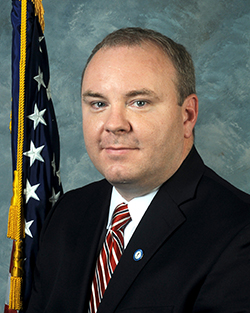
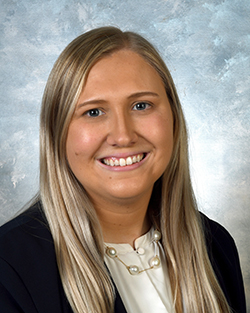
Last action · January 14, 2026: to Appropriations & Revenue (H)Sponsors: Lisa Willner and 4 others
Track this bill to get notified when it advances a stage. One tap to stop, anytime.
What This Bill Proposed
Kentucky public schools and public charter schools serving grades six through twelve must provide free menstrual products in at least one school building location and in at least fifty percent of student bathrooms. The measure appropriates $2,000,000 in General Fund moneys for each of the 2026-2028 biennium to fund product distribution, taking effect July 1, 2026.
- The General Assembly is the legislative branch of the Commonwealth of Kentucky, responsible for enacting state laws and passing biennial state budgets. context
- Title IX of the Education Amendments of 1972 is a federal law prohibiting sex discrimination in any education program or activity receiving federal financial assistance. context
Who It Would Have Affected
Groups the bill's text would have affected, as described in the record. Being affected is not a position for or against it.
Students in grades six through twelve
Students gain access to free menstrual products in school buildings and designated bathrooms without penalty for menstrual-related needs.
Local boards of education and public charter school boards
Boards must adopt distribution and accountability policies, appoint building points of contact, and submit annual inventory reports.
Kentucky Department of Education
The department negotiates procurement contracts, administers the tiered reimbursement funding formula, issues guidance, and reports annually to the legislature.
Key Facts
- Public schools and charter schools serving grades six through twelve must make at least one type of menstrual product available at no cost in each school building and in at least fifty percent of designated student bathrooms.
- Local boards of education and charter school boards must adopt policies establishing distribution procedures, guidance on safe use, and prohibitions against resale or misuse.
- Schools must implement accountability measures including annual reporting to the department by June 15, a restocking schedule ensuring products are checked at least every two weeks, and a designated point of contact in each building.
- The Kentucky Department of Education is authorized to negotiate bulk purchasing contracts, set product standards, and distribute funding using a three-tiered fairness-weighted reimbursement formula based on free or reduced-price lunch eligibility.
Show all 11 facts
- Tier 1 districts (70 percent or more qualifying for free/reduced-price lunch) receive 100 percent reimbursement, free dispensers, and up to two cents per student for waste management.
- Tier 2 districts (50 to 69 percent qualifying) receive 50 percent reimbursement and free dispensers.
- Tier 3 districts (less than 50 percent qualifying) receive 25 percent reimbursement and may opt into the state purchasing contract.
- Total annual program costs are capped at two million dollars through bulk purchasing and need-based reimbursements.
- The department must submit an annual report by June 30 to the Legislative Research Commission for referral to the Interim Joint Committee on Education detailing district distributions and cost savings.
- An appropriation of $2,000,000 in General Fund moneys is allocated for each fiscal year of the 2026-2028 fiscal biennium to the Learning and Results Services budget unit within the Department of Education.
- Access to menstrual products is defined as part of ensuring equal educational opportunity under federal Title IX requirements, and students may not be penalized or denied educational access due to menstrual-related needs.
Frequently Asked Questions
Which schools are required to provide free menstrual products?
How are school districts reimbursed for the cost of the products?
What accountability measures must schools implement?
What else do you want to know?
News Coverage
Follow the record
Votes, people, money & the original sourceWhere This Stands
This bill did not become law - Died at adjournment · in House committee.
Procedural history
2 actions- Jan 14, 2026HouseCommitteeto Appropriations & Revenue (H)
- Jan 7, 2026HouseIntroducedintroduced in House to Committee on Committees (H)
Version history
Only one version on file - nothing to compare yet. As later stages (committee substitute, engrossed, enrolled) are captured, the redline appears here.
View official text →Lobbying Activity
No state lobbying filings in our records match this bill. Federal lobbying reports (LDA) cover Congress, so they are not listed on state bills.
Full breakdown
Who this bill affects and the strongest case for and against it, written only from the bill’s own text.
Sponsors



Discoveries
Patterns POLISCOPE noticed across the record. These are observations to investigate, not conclusions.
Mandatory Provision of Menstrual Products
Establishes a statutory requirement for public and charter schools to supply free menstrual products in designated bathrooms for students in grades six through twelve.
Tiered Need-Based Reimbursement
Links state financial reimbursement percentages directly to district free or reduced-price lunch eligibility tiers.
Connected Entities
Sources
apps.legislature.ky.gov
Analysis Score
0–100- Significance20Lowered because this bill did not pass (its text scored 75)
- Controversy45Intensity of disagreement among stakeholders
- Entertainment5Compellingness for a non-policy-wonk reader
- Buzz60Current news / social attention level
Publisher tools