
The civic record
Read. Follow. Verify.Illinois Establishes the Textured Hair Licensing Act to Regulate Cirrology and Protect Consumer Health
Last action · May 21, 2026: Added Co-Sponsor Rep. Mary Beth CantySponsors: Carol Ammons-Justin Slaughter-Lisa Davis-Stephanie A. Kifowit and 4 others
Track this bill to get notified when it advances a stage. One tap to stop, anytime.
What This Bill Would Do
This Act creates the Textured Hair Licensing Act in Illinois to establish '' as a distinct, nonchemical licensing field for textured hair care, natural styling, and hair braiding. It institutes professional standards, sanitation requirements, school licensure, a three-way paid apprenticeship model, and a 9-member Board of Cirrology under the Department of Financial and Professional Regulation. The measure provides an 18-month transition period and automatic license renewal rights for currently active hair braiders.
Textured hair care practitioners must now comply with distinct licensure, training hours (600 hours for schools or 1,200 hours for apprenticeships), and continuing education requirements. Salons offering these services must obtain a certificate of registration, and individuals performing these services for compensation without a credential face disciplinary action and civil penalties.
- Prior to this enactment, hair braiding and related nonchemical textured hair practices in Illinois were regulated under the Barber, Cosmetology, Esthetics, Hair Braiding, and Nail Technology Act of 1985. context
- The Department of Financial and Professional Regulation serves as the state agency responsible for overseeing professional licensure, registrations, and disciplinary enforcement across various trades and professions in Illinois. context
Who It Would Affect
Groups the bill's text would affect if enacted, as described in the record. Being affected is not a position for or against it.
Textured hair care practitioners
Practitioners must obtain a cirrology license or complete approved training and continuing education to practice for compensation.
Hair braiding license holders
Active license holders are eligible for automatic transition into the cirrology licensure category during the 18-month transition period.
Cirrology school and shop owners
Owners must secure school licenses or shop certificates of registration and comply with sanitation, recordkeeping, and operational standards.
Consumers of textured hair services
Consumers benefit from established public health, safety, sanitation, and accountability standards in textured hair facilities.
Key Facts
- Establishes 'cirrology' as a separate, nonchemical licensing field for textured hair care, hair braiding, loc care, and protective styling.
- Sets the primary pathway to licensure as completing a licensed cirrology school program of at least 600 clock hours of instruction and supervised practical training.
- Establishes a secondary apprenticeship pathway requiring at least 1,200 hours of supervised paid practical training and 150 hours of related instruction in a one-year program.
- Creates an 18-month transition period allowing active Illinois hair braider license holders in good standing to transition automatically into the cirrology licensure category without completing the full 600-hour school program.
Show all 10 facts
- Establishes the 9-member Board of Cirrology within the Department of Financial and Professional Regulation to advise on standards, curriculum, and qualifications.
- Requires licensed cirrologists to complete 8 hours of continuing education every 2 years, and licensed cirrology teachers to complete 10 hours every 2 years.
- Requires a $25 registration fee for registered cirrology shops, with certificates expiring on November 30 of even-numbered years.
- Prohibits cirrologists from performing chemical straightening, relaxers, permanent waves, chemical coloring, bleaching, or medical procedures such as surgery or treating scalp diseases.
- Grants the Department authority to discipline credential holders, issue cease and desist orders, and impose administrative fines for violations or unlicensed practice.
- Amends the Regulatory Sunset Act to repeal the Textured Hair Licensing Act and prior cosmetology-related acts on January 1, 2031.
Frequently Asked Questions
What is cirrology under this new law?
Do current licensed hair braiders need to complete 600 hours of school to get a cirrology license?
Can a cirrologist apply chemical relaxers or hair dye?
What else do you want to know?
News Coverage
Bias ratings based on AllSides / Media Bias/Fact Check
Follow the record
Votes, people, money & the original sourceWhere This Stands
Currently passed chamber. The next step in the legislative lifecycle is Law.
Procedural history
33 actions- May 21, 2026HouseAdded Co-Sponsor Rep. Mary Beth Canty
- Apr 21, 2026SenateCommitteeReferred to Assignments
- Apr 21, 2026SenateIntroducedFirst Reading
- Apr 21, 2026SenateChief Senate Sponsor Sen. Don Harmon
- Apr 21, 2026SenateIntroducedPlaced on Calendar Order of First Reading
- Apr 21, 2026SenateArrive in Senate
Show 27 earlier actions
- Apr 17, 2026HouseFloorThird Reading - Short Debate - Passed 072-030-000
- Apr 17, 2026HousePlaced on Calendar Order of 3rd Reading - Short Debate
- Apr 17, 2026HouseFloorHouse Floor Amendment No. 1 Adopted
- Apr 17, 2026HouseCommitteeHouse Floor Amendment No. 1 Recommends Be Adopted Executive Committee; 012-000-000
- Apr 17, 2026HouseAdded Chief Co-Sponsor Rep. Sonya M. Harper
- Apr 17, 2026HouseAdded Co-Sponsor Rep. Nicolle Grasse
- Apr 17, 2026HouseRemove Chief Co-Sponsor Rep. Nicolle Grasse
- Apr 17, 2026HouseHouse Floor Amendment No. 1 Rules Refers to Executive Committee
- Apr 16, 2026HouseAdded Chief Co-Sponsor Rep. Nicolle Grasse
- Apr 16, 2026HouseAdded Chief Co-Sponsor Rep. Stephanie A. Kifowit
- Apr 16, 2026HouseAdded Chief Co-Sponsor Rep. Lisa Davis
- Apr 16, 2026HouseAdded Chief Co-Sponsor Rep. Justin Slaughter
- Apr 16, 2026HouseCommitteeHouse Floor Amendment No. 1 Referred to Rules Committee
- Apr 16, 2026HouseIntroducedHouse Floor Amendment No. 1 Filed with Clerk by Rep. Carol Ammons
- Apr 16, 2026HouseChief Sponsor Changed to Rep. Carol Ammons
- Apr 14, 2026HousePlaced on Calendar 2nd Reading - Short Debate
- Apr 14, 2026HouseApproved for Consideration Rules Committee; 005-000-000
- May 31, 2025HouseCommitteeRule 19(a) / Re-referred to Rules Committee
- Apr 11, 2025HouseFloorThird Reading Deadline Extended-Rule May 31, 2025
- Mar 27, 2025HouseFloorHeld on Calendar Order of Second Reading - Short Debate **
- Mar 27, 2025HouseFloorSecond Reading - Short Debate
- Mar 12, 2025HousePlaced on Calendar 2nd Reading - Short Debate **
- Mar 12, 2025HouseCommitteeDo Pass / Short Debate Executive Committee; 012-000-000
- Mar 4, 2025HouseCommitteeAssigned to Executive Committee
- Jan 9, 2025HouseCommitteeReferred to Rules Committee
- Jan 9, 2025HouseIntroducedFirst Reading
- Dec 17, 2024HouseIntroducedPrefiled with Clerk by Rep. Emanuel "Chris" Welch
Version history
Only one version on file - nothing to compare yet. As later stages (committee substitute, engrossed, enrolled) are captured, the redline appears here.
View official text →Lobbying Activity
No state lobbying filings in our records match this bill. Federal lobbying reports (LDA) cover Congress, so they are not listed on state bills.
Full breakdown
Who this bill affects and the strongest case for and against it, written only from the bill’s own text.
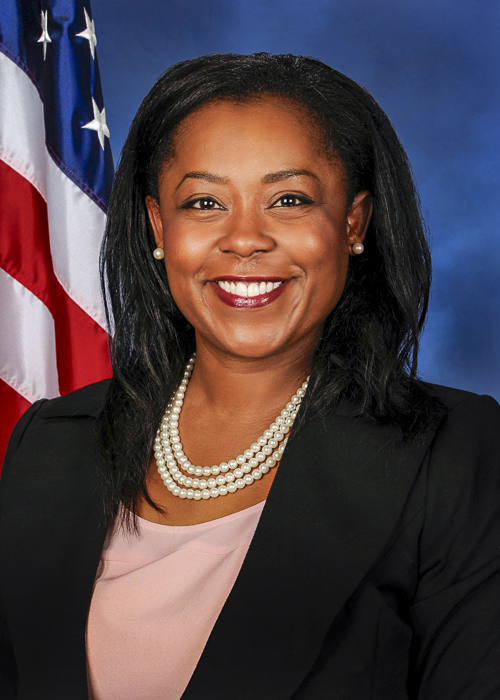
Sponsors


Discoveries
Patterns POLISCOPE noticed across the record. These are observations to investigate, not conclusions.
Creation of Stand-Alone Cirrology Framework
The legislation removes hair braiding references from the Barber, Cosmetology, Esthetics, Hair Braiding, and Nail Technology Act of 1985 and establishes 'cirrology' as an independent professional field.
Connected Entities
Sources
ftp.ilga.gov
Analysis Score
0–100- Significance85How much this matters to a regular citizen
- Controversy25Intensity of disagreement among stakeholders
- Entertainment5Compellingness for a non-policy-wonk reader
- Buzz40Current news / social attention level
Publisher tools