
NewsABC7 News San Francisco (KGO-TV)November 4, 2026San Francisco County
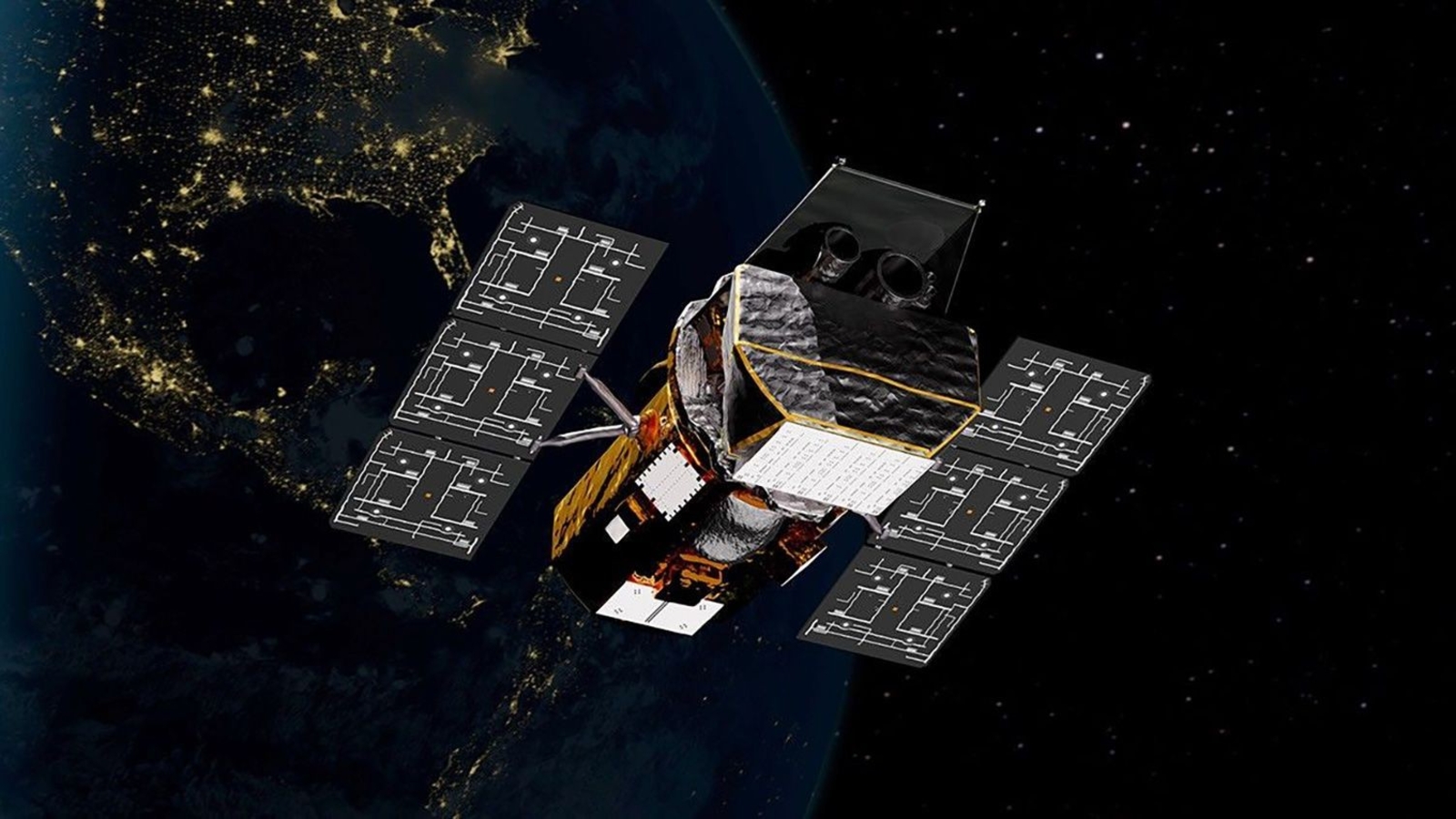
NASA’s Neil Gehrels Swift Observatory reenters Earth's atmosphere over Indonesia after 22 years in space
Photo: ABC7 News San Francisco (KGO-TV)
NASA's 3,200-pound Neil Gehrels Swift Observatory plunged back into Earth’s atmosphere over Indonesia on Wednesday morning after nearly 22 years of operation. While most of the spacecraft burned up upon reentry, it remains unclear whether any surviving debris reached land. A recent commercial rescue mission to stabilize and boost the telescope failed after the servicing spacecraft spun out of control in space.
Read the full story at ABC7 News San Francisco (KGO-TV)Why It Matters
The loss of the Swift Observatory leaves researchers without its specific rapid-response capabilities for tracking transient cosmic events like , while highlighting ongoing challenges in orbital debris management and satellite lifespan extension.
Key Facts
- NASA’s 3,200-pound Neil Gehrels Swift Observatory reentered Earth's atmosphere over Indonesia around 7:39 a.m. ET on Wednesday.
- US Space Force data tracked the uncontrolled reentry after atmospheric drag pulled the spacecraft out of a stable orbit.
- A Penn State research team sent the final kill-switch command to Swift on October 20.
- Katalyst Space Technologies launched a rescue spacecraft named LINK in July to stabilize and boost Swift, but the mission failed when LINK spun out of control.
- Solar activity peaking in 2024 caused Earth's atmosphere to expand, increasing atmospheric drag and hastening Swift's descent.
- Current orbital debris standards updated in 2019 mandate that uncontrolled reentries have an expected casualty risk of less than 1 in 10,000.
- NASA previously estimated the risk of harm to anyone on Earth from Swift's reentry at approximately 1 in 2,100.
- Swift was launched in November 2004 to study gamma-ray bursts and other fast-flying cosmic events, and currently has no established replacement waiting in the wings.
- NASA recently issued a Request for Proposals (RFP) to commercial companies seeking ways to prolong the life of the Hubble Space Telescope.
- NASA's analysis indicates a 10% chance Hubble will plunge out of orbit by 2032 and a 50% chance by 2033.
Who's Mentioned
OrganizationHubble Space Telescope“Telescope that NASA recently issued an RFP to prolong the life of”OrganizationLINK“Craft produced to grapple and lift the Swift observatory”OrganizationKatalyst Space Technologies“Company that built the LINK spacecraft for the rescue attempt”OrganizationThe Aerospace Corporation“Federally funded research and development center providing orbital debris standa”OrganizationPenn State“NASA partner and home to the observatory’s Mission Operations Center”locationArizona“State where Katalyst Space Technologies is based”PersonParker Wishik“Spokesperson for The Aerospace Corporation”OrganizationNeil Gehrels Swift Observatory“Spacecraft that reentered Earth's atmosphere”OrganizationUS Space Force“Provided data on the spacecraft's reentry”locationIndonesia“Location over which the spacecraft plunged into Earth's atmosphere”OrganizationNASA“Space agency operating the Swift Observatory and Hubble Space Telescope”