
NewsWUSF (NPR Tampa Bay) — EnvironmentNovember 18, 2026Hillsborough County
Coral scientists worry Amendment 3 will stymy reef restoration
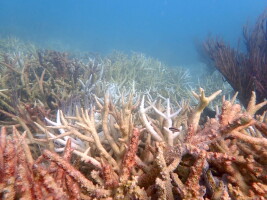
Photo: WUSF (NPR Tampa Bay) — Environment
Coral restoration groups in Florida face funding uncertainties following the withdrawal of a promised 10-year funding plan by state leaders and the passage of Amendment 3, a tax cut measure that reduces local government revenue. Scientists warn that without new funding to plant lab-grown corals onto the reef, the structure could erode and threaten an $8 billion annual economic impact.
Read the full story at WUSF (NPR Tampa Bay) — EnvironmentWhy It Matters
Local governments that rely on property tax revenue may have less money to support services and climate resilience projects, such as coral reef restoration, while state funding for 14 participating groups is expected to run out next year.
Key Facts
- State lawmakers and Gov. Ron DeSantis withdrew from a promised 10-year funding plan to save Florida's reef.
- Amendment 3, a tax cut measure passed by voters, is expected to reduce revenues for local governments that fund services and climate resilience projects.
- Over the first three years of the state restoration effort launched in 2023, 14 groups received a total of $28.5 million.
- State funding for participating groups is expected to run out next year.
- A marine heat wave in the summer of 2023 killed most staghorn coral in nurseries and wild stands, leading staghorn and elkhorn corals to be declared functionally extinct in 2025.
- Scientists are meeting monthly at Nova Southeastern University's National Coral Reef Institute to propose a plan written into law similar to the federal Everglades Restoration Plan.
- Miami Waterkeeper started a petition to send to lawmakers prior to December budget talks.
- The initial 2023 restoration effort set a goal to restore 25% of the reef by 2050.
Who's Mentioned
PersonRon DeSantis“Governor of Florida who backed out of a promised funding plan and signed a resto”OrganizationNova Southeastern University's National Coral Reef Institute“Location where scientists started meeting monthly to draft a new plan”PersonJoanna Walczak“Former chief of Florida DEP's coral restoration program and head of conservation”OrganizationLoggerhead Marinelife Center“Organization where Joanna Walczak works”OrganizationFlorida Aquarium“One of 14 groups that received state funding for coral restoration”OrganizationPhillip and Patricia Frost Museum of Science“Location of a reef symposium in Miami”OrganizationWLRN“Copyright holder for the news article”OrganizationBoy Scouts of America“Group operating the Sea Base Brinton Environmental Center”PersonAbigail Clark“STEM director and fisheries biologist at Boy Scout's Sea Base Brinton Environmen”OrganizationMiami Waterkeeper“Group that started a petition to send to lawmakers”OrganizationUniversity of Miami“One of 14 groups that received state funding for coral restoration”OrganizationNewfound Harbor Marine Institute“Seacamp on Big Pine Key that received funding”