
The civic record
Read. Follow. Verify.Federal Disaster Tax Relief Act of 2025
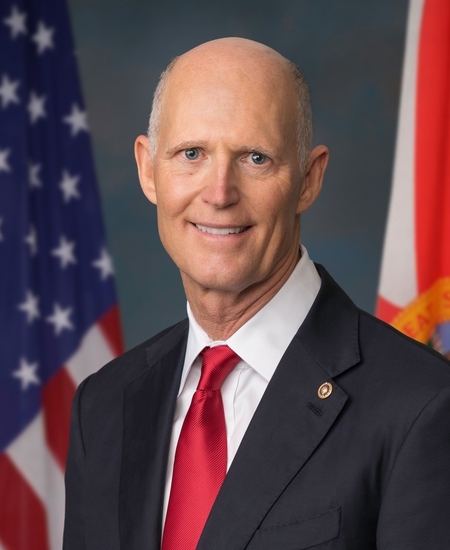
Last action · September 9, 2025: Read twice and referred to the Committee on Finance.Sponsors: Rick Scott and 4 others
Track this bill to get notified when it advances a stage. One tap to stop, anytime.
What This Bill Would Do
This bill proposes changes to the federal tax code to allow individuals to deduct personal es from major disasters declared between July 2025 and January 2027. It also excludes certain wildfire-related compensation payments from being counted as taxable income for payments received between 2026 and 2030.
The bill would allow residents in federally declared disaster areas to claim tax deductions for property losses and exclude wildfire compensation payments from their taxable income, potentially reducing their federal tax liability for the 2025-2030 period.
Who It Would Affect
Groups the bill's text would affect if enacted, as described in the record. Being affected is not a position for or against it.
Residents in federally declared disaster areas
Individuals in these areas may qualify for new tax deductions for personal casualty losses.
Wildfire victims
Individuals receiving compensation for wildfire-related damages may exclude those payments from their taxable income.
Key Facts
- Establishes tax deductions for 'qualified net disaster losses' for major disasters declared between July 5, 2025, and December 31, 2026.
- Excludes 'qualified wildfire relief payments' from gross income for payments received between January 1, 2026, and December 31, 2030.
- Defines 'qualified wildfire relief payments' as compensation for losses, expenses, or damages from forest or range fires that are not covered by insurance.
- Allows the disaster loss deduction to be taken in addition to the standard deduction.
Show all 8 facts
- Exempts the disaster loss deduction from the Alternative Minimum Tax (AMT) calculation.
- Sets the casualty loss threshold at $100 for net disaster losses.
- Applies disaster loss deduction rules to taxable years beginning after December 31, 2024.
- Prohibits 'double benefits' by denying deductions or credits for expenditures already covered by tax-excluded wildfire relief payments.
Frequently Asked Questions
Does this bill cover all disasters?
Will my wildfire insurance payout be taxed?
Can I claim these deductions if I take the standard deduction?
What else do you want to know?
News Coverage
Follow the record
Votes, people, money & the original sourceWhere This Stands
Currently in committee. The next step in the legislative lifecycle is Floor Vote.
Procedural history
2 actions- Sep 9, 2025SenateCommitteeRead twice and referred to the Committee on Finance.
- Sep 9, 2025SenateIntroducedIntroduced in Senate
Version history
Only one version on file - nothing to compare yet. As later stages (committee substitute, engrossed, enrolled) are captured, the redline appears here.
View official text →Lobbying Activity
AARP
2026
“P.L. 119-21, One Big Beautiful Bill Act H.R. 8867, Planning for Long-term Aging Needs (PLAN) Act H.R. 5861, Legacy Act of 2025 H.R. 9393, the Lower Costs, More Transparency Act. H.R. 9396, the Prior Authorization Accountability Act. S. 4916, the Aging with Artificial Intelligence Act. H.R. 8100, Safe Staffing Saves Lives Act. S. 3886, Nurses Belong in Nursing Homes Act. H.R. 6766/S. 3492, the Essential Caregivers Act of 2025. H.R. 7966/S. 4118, Hospice Care Accountability, Reform, and Enforcement (Hospice CARE) Act. S. 2120, the Older Americans Act Reauthorization Act of 2025 H.R. 5575, the Firefighters Assisting Seniors to Emergency Response (FASTER) Act of 2025. H.R. 3954/S. 4641, Improving Access to Medicare Coverage Act. H.R.5554/S.2831, Stand Strong for Medicare Act. S. 3439/H.R. 6735, Connecting Caregivers to Medicare Act and efforts related to the bill S. 1227/H.R. 2491, Alleviating Barriers for Caregivers Act S. 668/H.R. 3183, Supporting Access to Falls Education and Prevention and Strengthening Training Efforts and Promoting Safety Initiatives (SAFE STEPS) for Veterans Act of 2025 CMS-1851-P, Hospice Proposed rule. CMS-1843-P, Skilled Nursing Facility Proposed rule. CMS-1844-P, Home Health Proposed rule. No bill number. Health care transparency. No bill number. Discussed use of artificial intelligence and health data technology. No bill number. Discussed health-related policies and activities around the fall respiratory virus season. No bill number. Discussed health insurance affordability proposals. No bill number. Discussed Nursing Home staffing standards, safety, and quality. No bill number. Discussed Nursing home transparency and ownership requirements. No bill number. Discussed home health, hospice, and long-term care. No bill number. Discussed falls prevention. No bill number. Discussed social isolation. No bill number. Discussed HUD Assisted Living Requirements No bill number. Discussed family caregiving. No bill number. Discussed AARP paper on Medicare Caregiver Training Services. No bill number. Discussed Medicaid community engagement interim final rule, including the family caregiver exemption. No bill number. Discussed the paid direct care workforce in long-term care. No bill number. Discussed the unaffordability of long-term care. No bill number. Discussed Money Follows the Person Rebalancing Demonstration Program and Medicaid HCBS spousal impoverishment protections. No bill number. Discussed Medicaid fraud and family caregivers, Medicaid self-direction programs. No bill number. Discussed sandwich generation family caregiver hearing and submitted a statement for the record discussing family caregivers and sandwich generation caregivers, programs that support them, AARP caregiving resources, and federal policies to support sandwich generation caregivers and caregivers more broadly. No bill number. Discussed long-term care. No bill number. CMS-2453-NC; Medicaid Program; 2028 Medicaid Home and Community-Based Services Quality Measure Set Submitted comments No bill number. Discussed expanding access to home care. No bill number. Discussed the increasing cost of home care No bill number. Discussed HSA use for telehealth chronic care management services/subscriptions. No bill number. Discussed artificial intelligence and technology”
Full breakdown
Who this bill affects and the strongest case for and against it, written only from the bill’s own text.
Sponsors

Discoveries
Patterns POLISCOPE noticed across the record. These are observations to investigate, not conclusions.
Expansion of Disaster Deductions
The bill creates a specific carve-out for disaster losses to be claimed alongside the standard deduction, which is a notable shift in how casualty losses are treated relative to standard tax filings.
Connected Entities
Sources
www.congress.gov
Analysis Score
0–100- Significance65How much this matters to a regular citizen
- Controversy15Intensity of disagreement among stakeholders
- Entertainment5Compellingness for a non-policy-wonk reader
- Buzz20Current news / social attention level
Publisher tools