
Secretary of Transportation Sean Duffy explains national ground stop caused by overloaded FAA analog air…
Photo: Los Angeles Times – Politics
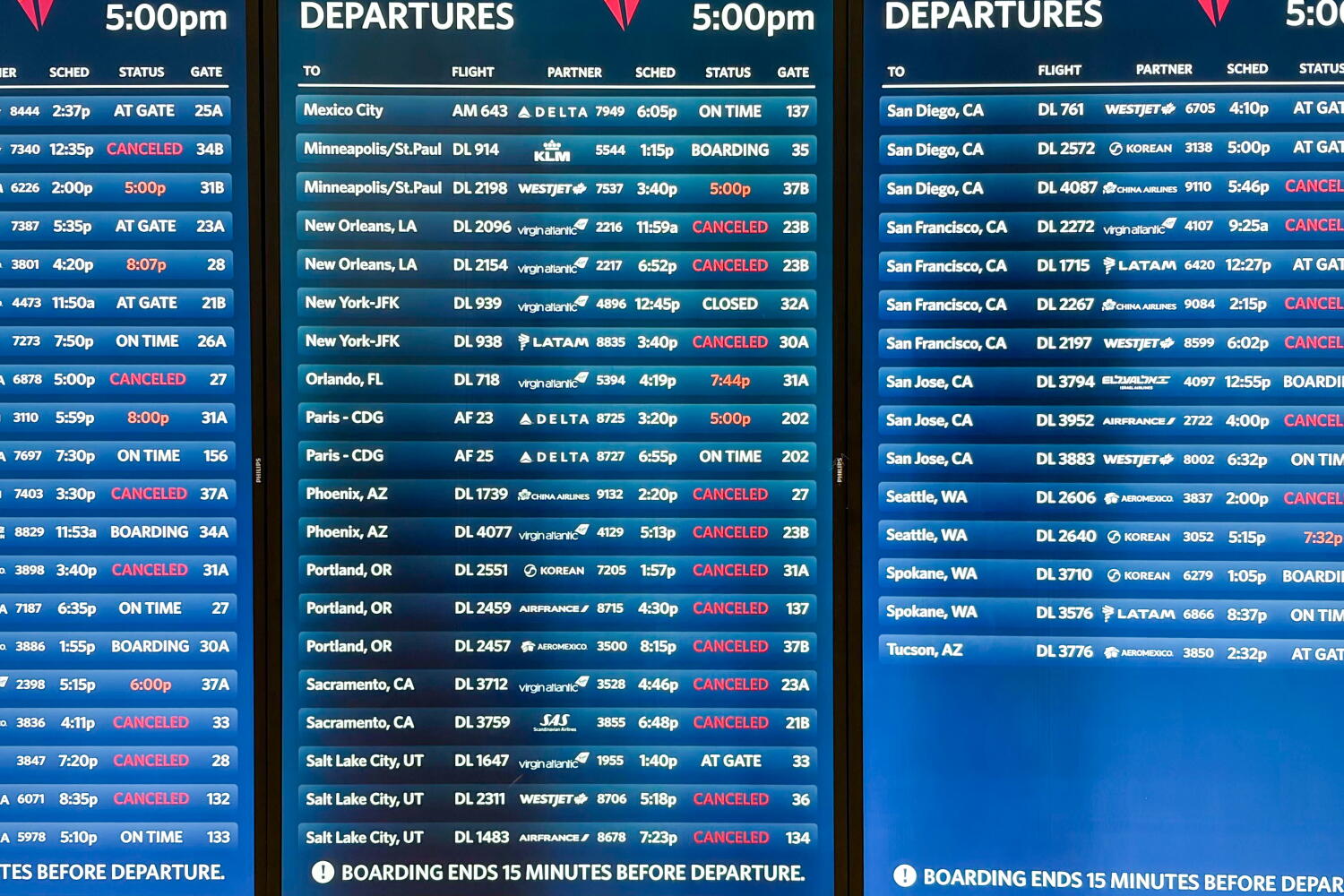
A nationwide ground stop halted nearly all U.S. aircraft for over four hours after switches and routers on the Federal Aviation Administration's 1980s-era analog air traffic control system became overloaded with data during upgrades. Transportation Secretary Sean Duffy stated that dated copper-wire technology and time-division multiplexing caused communication and radar inconsistencies, prompting a shutdown shortly after 12:30 p.m. to prevent safety risks. Flights began resuming around 5:15 p.m. after fixes were deployed, though lingering delays are expected to last for days.
Read the full story at Los Angeles Times – PoliticsWhy It Matters
Tens of thousands of travelers were stranded, college football teams scrambled for alternative travel, and FEMA mobilized to ensure passengers did not miss lifesaving medication.
Key Facts
- A nationwide ground stop of virtually all U.S. aircraft lasted for more than four hours on Friday.
- The ground stop began shortly after 12:30 p.m. and ended around 5:15 p.m.
- Secretary of Transportation Sean Duffy stated that switches and routers on the FAA's analog air traffic control system became overloaded with data.
- Homeland Security Secretary Markwayne Mullin noted the communications failure occurred as the FAA was performing upgrades and new technology overwhelmed the older system.
- The breakdown involved TDM (time-division multiplexing), a dated copper-wire technology used to transmit voice and radar data.
- There was no evidence of a cyberattack or involvement by foreign adversaries, according to Duffy.
- Over 3,500 airplanes were airborne across America when the decision to close the airspace was made.
- FEMA was mobilized to ensure passengers did not miss lifesaving medication.
- The FAA is currently using $12.5 billion secured through previous legislation to upgrade its systems, while officials called on Congress for an additional $50 billion to complete modernization.
- Delays are expected to persist for days due to flight crew and pilot availability.