
The civic record
Read. Follow. Verify.Kentucky General Assembly Enacts 2026-2028 State/Executive Branch Budget Totaling Billions in Operating and Capital Funds
Last action · April 14, 2026: received in House to Rules (H) taken from Rules posted for consideration of Governor's line vetoes vetoes overridden in-part passed 74-19 received in Senate to Rules (S) posted for consideration of Governor's line vetoes vetoes overridden in-part passed 32-6 received in House enrolled, signed by Speaker of the House enrolled, signed by President of the Senate delivered to Secretary of State (Acts Ch. 168)Sponsors: Jason Petrie and 3 others
Track this bill to get notified when it advances a stage. One tap to stop, anytime.
What This Bill Does
The Kentucky General Assembly enacted House Bill 500, establishing the state operating and capital budget for the 2026-2028 fiscal biennium, following partial vetoes by the Governor that were overridden in part on April 14, 2026. The legislation appropriates billions across state agencies, cabinets, and public postsecondary institutions, and sets policy conditions for government operations, education funding, and employee compensation.
The measure determines funding levels, salary increments, tuition support, and operational conditions for state agencies, public schools, universities, and health programs across Kentucky for the next two fiscal years.
- The General Assembly of the Commonwealth of Kentucky enacts the biennial state budget to fund government operations, public education, and state services. context
- House Bill 500 covers operating budgets, capital projects, and general provisions for state agencies and public universities for the 2026-2028 fiscal biennium. context
Who It Affects
Groups the bill's text affects, as described in the record. Being affected is not a position for or against it.
State Employees
Eligible state employees receive a two percent salary increase effective July 1, 2026, and another two percent increase effective July 1, 2027.
Public School Districts
School districts receive SEEK program allocations, base per-pupil guarantees, and facility support funding subject to compliance with website reporting and assessment display requirements.
Medicaid Beneficiaries
The budget funds Medicaid benefits and administration, provider reimbursements, and specific waiver slots across the biennium.
Local Governments
Local governments receive distributions from the Local Government Economic Assistance Fund and Economic Development Fund, alongside specific project grants.
Key Facts
You don't have to trust us. Each fact below is taken straight from the official document - click any one to see the exact passage, highlighted in the original.
Frequently Asked Questions
What salary increases are provided for state employees in this budget?
What is the per-student base guarantee under the SEEK program in this budget?
Are there funds allocated for statewide 9-1-1 services upgrades?
What else do you want to know?
News Coverage
Follow the record
Votes, people, money & the original sourceWhere This Stands
Current status: Signed into law with line-item vetoes.
Procedural history
16 actions- Apr 14, 2026Housereceived in House to Rules (H) taken from Rules posted for consideration of Governor's line vetoes vetoes overridden in-part passed 74-19 received in Senate to Rules (S) posted for consideration of Governor's line vetoes vetoes overridden in-part passed 32-6 received in House enrolled, signed by Speaker of the House enrolled, signed by President of the Senate delivered to Secretary of State (Acts Ch. 168)
- Apr 13, 2026Houseline items vetoed
- Apr 1, 2026HouseEnrolledConference Committee report (1) filed in House and Senate Conference Committee report adopted in House and Senate Free Conference Committee appointed in House and Senate Free Conference Committee report filed in House and Senate posted for passage for consideration of Free Conference Committee Report Free Conference Committee report adopted in Senate passed 38-0 received in House to Rules (H) taken from Rules posted for passage for consideration of Free Conference Committee Report Free Conference Committee report adopted in House passed 73-21 enrolled, signed by Speaker of the House enrolled, signed by President of the Senate delivered to Governor
- Mar 19, 2026HouseCommitteereceived in House to Rules (H) posted for passage for concurrence in Senate Committee Substitute (1) House refused to concur in Senate Committee Substitute (1) received in Senate to Rules (S) taken from Rules posted for passage for receding from Senate Committee Substitute (1) Senate refused to recede Conference Committee appointed in House and Senate
- Mar 18, 2026HouseFloorreported favorably, to Rules with Committee Substitute (1) taken from Rules placed in the Orders of the Day 3rd reading, passed 38-0 with Committee Substitute (1)
- Mar 17, 2026SenateFloortaken from Appropriations & Revenue (S) 2nd reading returned to Appropriations & Revenue (S)
Show 10 earlier actions
- Mar 16, 2026SenateCommitteetaken from Appropriations & Revenue (S) 1st reading returned to Appropriations & Revenue (S)
- Mar 2, 2026SenateCommitteeto Appropriations & Revenue (S)
- Feb 27, 2026SenateIntroducedreceived in Senate to Committee on Committees (S)
- Feb 26, 2026HouseFloorreported favorably, to Rules with Committee Substitute (1) taken from Rules placed in the Orders of the Day 3rd reading floor amendments (12), (14) and (15) filed to Committee Substitute , floor amendments (9), (10), (11) and (13) filed to bill passed 81-18 with Committee Substitute (1)
- Feb 25, 2026HouseFloortaken from Appropriations & Revenue (H) 2nd reading returned to Appropriations & Revenue (H)
- Feb 24, 2026HouseCommitteetaken from Appropriations & Revenue (H) 1st reading returned to Appropriations & Revenue (H)
- Feb 23, 2026Housefloor amendment withdrawn Floor Amendment (2) floor amendment (8) filed
- Feb 20, 2026Housefloor amendments (1), (2), (3), (4), (5), (6) and (7) filed
- Feb 3, 2026HouseCommitteeto Appropriations & Revenue (H)
- Jan 27, 2026HouseIntroducedintroduced in House to Committee on Committees (H)
Version history
Only one version on file - nothing to compare yet. As later stages (committee substitute, engrossed, enrolled) are captured, the redline appears here.
View official text →Lobbying Activity
No state lobbying filings in our records match this bill. Federal lobbying reports (LDA) cover Congress, so they are not listed on state bills.
Full breakdown
Who this bill affects and the strongest case for and against it, written only from the bill’s own text.
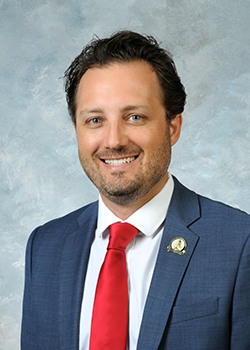
Sponsors



Discoveries
Patterns POLISCOPE noticed across the record. These are observations to investigate, not conclusions.
Biennial Appropriations and Executive Veto Overrides
House Bill 500 sets comprehensive state spending for three fiscal years (including prior adjustments and the 2026-2028 biennium) and reflects legislative overrides of gubernatorial line-item vetoes.
Connected Entities
Sources
apps.legislature.ky.gov
Analysis Score
0–100- Significance100How much this matters to a regular citizen
- Controversy65Intensity of disagreement among stakeholders
- Entertainment10Compellingness for a non-policy-wonk reader
- Buzz75Current news / social attention level
Publisher tools