
NewsWLRN — South Florida NPR (Government & Politics)October 26, 2026Miami-Dade County
News Article Explores Challenges and Inaccuracies in Election Polling
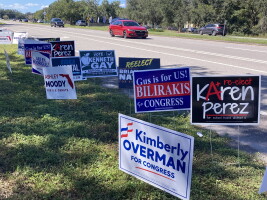
Photo: WLRN — South Florida NPR (Government & Politics)
This news article examines the systemic difficulties pollsters face in accurately predicting election outcomes, highlighting shifting voter response rates, unpredictable turnout, and changing political landscapes in Florida. Industry experts explain how factors like landline reliance, cell phone voter lists, and partisan response biases complicate modern polling accuracy.
Read the full story at WLRN — South Florida NPR (Government & Politics)Why It Matters
Understanding the limitations of election polls helps voters interpret media coverage and pre-election forecasts more critically.
Key Facts
- Pollsters note that predicting election outcomes has become increasingly difficult since the 2016 presidential election due to unpredictable voter turnout and shifting response rates.
- Florida publishes monthly registered voter lists containing phone numbers, allowing pollsters to text surveys to voters who have provided their cell phone numbers.
- Political science experts identify 'non-response bias' as a major hurdle, noting that over the past decade, Republicans have tended to respond to polls at a lower rate than Democrats.
- Elections involving Donald Trump on the ballot are described by researchers as more difficult for pollsters to predict accurately.
- Midterm elections in 2018 and 2022, when Trump was not on the ballot, are cited as having been fairly accurate in polling.
- A recent Public Opinion Research lab poll of 1,400 likely voters shows Republican Byron Donalds and Democrat David Jolly in a competitive gubernatorial race.
- In the U.S. Senate race, Republican Ashley Moody's lead over Democrat Angie Nixon narrowed to four points, down from an eight-point lead in July.
- Experts recommend looking at aggregate sources that model and average multiple polls together rather than relying on isolated surveys.
Who's Mentioned
otherUniversity of North Florida“Institution housing the Public Opinion Research Lab”PersonAshley Moody“Republican U.S. Senate candidate”PersonAlexander Vindman“Candidate in the Democratic primary race for U.S. Senate”PersonByron Donalds“Republican gubernatorial candidate”PersonAndrew Gillum“Candidate in the 2018 gubernatorial race”PersonRon DeSantis“Candidate in the 2018 gubernatorial race”PersonHillary Clinton“Democratic presidential candidate in 2016”OrganizationPublic Opinion Research Lab“Polling and research organization”PersonDonald Trump“Republican presidential candidate”PersonSean Freeder“Political science teacher and researcher at University of North Florida”PersonAngie Nixon“Democratic candidate for U.S. Senate”OrganizationSt. Pete Polls“Independent polling service”OrganizationWUSF 89.7“Publisher of the news article”PersonDavid Jolly“Democratic gubernatorial candidate”PersonMatt Florell“President of St. Pete Polls”