
NewsWUSF — Tampa Bay NPR (Local & State)August 20, 2026Hillsborough County
Florida Department of Education requests changes to science textbooks to reduce climate change content
Photo: WUSF — Tampa Bay NPR (Local & State)
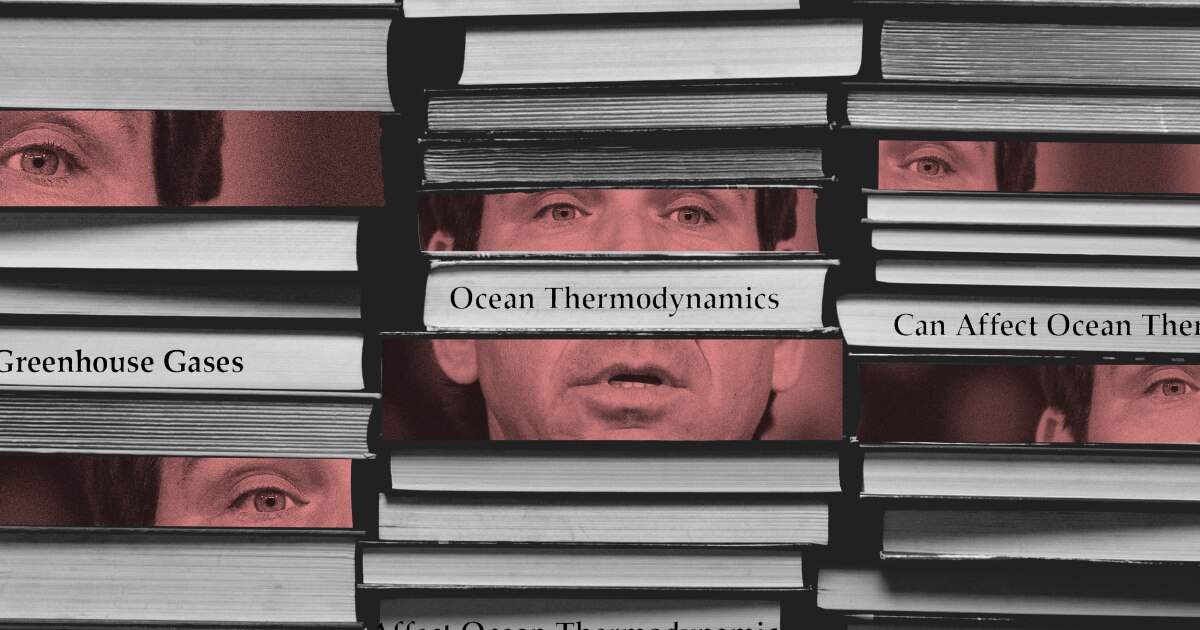
The Florida Department of Education has directed textbook publishers to modify science materials by removing or softening references to climate change and human-caused environmental impacts. These edits, which occurred during the summer of 2024, include replacing specific climate terminology with vague language and removing statistics regarding climate-related deaths.
Read the full story at WUSF — Tampa Bay NPR (Local & State)Why It Matters
These changes directly impact the educational content available to Florida's 3 million public school students, potentially altering how climate science is taught in high school electives.
Key Facts
- The Florida Department of Education requested publishers to water down or remove climate change content in textbooks during the summer of 2024.
- McGraw Hill’s Marine Science textbook replaced a statistic about 150,000 annual climate-related deaths with vague language about CO2 impacts.
- McGraw Hill changed the term 'climate change' to 'changes in the environment' in its Marine Science textbook.
- Cengage removed the word 'polluting' from a description of coal-burning power plants.
- Cengage removed a reference to University of Washington students voting to pay higher fees for renewable energy.
- Governor Ron DeSantis signed legislation in May 2024 removing references to climate change from state statutes.
- Florida is currently updating its science standards for the first time since 2008.
- Textbook authors Ken Miller and Joe Levine were asked to strike the phrase 'caused by human activity' from their biology textbook.
- Publishers were asked to provide peer-reviewed sources specifically for climate change claims, a requirement not applied to other biological topics like DNA or the digestive system.
- The Florida Department of Education reviews new textbooks approximately every five years.
Who's Mentioned
PersonRon DeSantis“Governor of Florida who signed legislation removing climate change references fr”OrganizationSavvas Learning Company“Publisher of the Florida Miller & Levine Experience Biology textbook.”OrganizationMcGraw Hill“Textbook publisher that edited its Marine Science book for Florida.”OrganizationCengage“Textbook publisher that removed references to 'polluting' coal plants.”OrganizationFlorida Department of Education“State agency overseeing textbook approval and curriculum standards.”other150,000“Statistic regarding annual deaths attributed to climate change removed from a te”PersonKen Miller“Professor emeritus of biology at Brown University and textbook author.”PersonMichael Huber“Author of McGraw Hill’s Marine Science textbook.”PersonGlenn Branch“Deputy director of the National Center for Science Education.”