
The civic record
Read. Follow. Verify.Wyoming establishes criminal penalties for AI-generated child exploitation, deepfakes, and political censorship
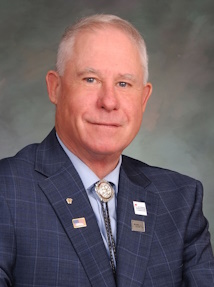
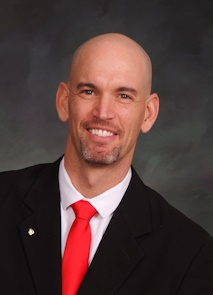
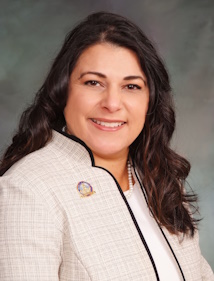
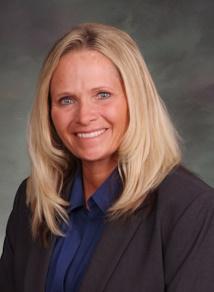
Last action · March 7, 2026: Assigned Chapter Number 91Sponsors: Jayme Lien and 22 others
Track this bill to get notified when it advances a stage. One tap to stop, anytime.
What This Bill Does
Wyoming establishes new criminal offenses and civil penalties for misusing artificial intelligence, prohibiting the distribution of nonconsensual , the creation of AI-generated child pornography, and the promotion of self-harm, while also barring s from censoring political speech. The law takes effect on July 1, 2026.
Residents face felony charges carrying up to 12 years in prison and fines reaching $10,000 for generating or distributing exploitative or nonconsensual deepfakes, while technology developers receive specific liability limitations and the state attorney general gains enforcement authority over platform speech moderation.
- State legislatures nationwide are increasingly enacting statutory frameworks to address the risks posed by generative artificial intelligence, including nonconsensual deepfakes and child exploitation material. context
Who It Affects
Groups the bill's text affects, as described in the record. Being affected is not a position for or against it.
Artificial intelligence developers
Developers receive legal immunity from third-party misuse of their systems unless they intended or should have known the system's primary purpose was illegal.
Interactive computer services
Platforms are prohibited from using artificial intelligence to censor user political speech and face civil penalties enforced by the attorney general.
Minors and individuals
Individuals receive legal protections against nonconsensual synthetic sexual material and the AI-driven exploitation of children.
Key Facts
- Using an artificial intelligence system to commit a criminal offense is explicitly prohibited as a defense against criminal charges under the Wyoming Criminal Code.
- Unlawful distribution of nonconsensual synthetic sexual material is classified as a felony punishable by up to 10 years imprisonment, a fine of up to $10,000, or both, with up to 12 years imprisonment for second or subsequent convictions.
- Generating or possessing child pornography created through an artificial intelligence system is established as a felony carrying imprisonment of 5 to 12 years or up to 10 years depending on the specific violation, along with a fine of up to $10,000.
- The knowing development or distribution of an artificial intelligence system intended to promote self-harm is established as a felony punishable by up to 10 years in prison and a $10,000 fine.
Show all 8 facts
- Interactive computer services using artificial intelligence are prohibited from blocking, banning, removing, de-platforming, demonetizing, or otherwise restricting users based on political speech.
- The state attorney general is authorized to bring enforcement actions and seek civil penalties of up to $10,000 for each violation involving the censorship of political speech by interactive computer services.
- Developers of artificial intelligence systems are generally protected from liability for damages arising from illegal or illicit use by third parties, unless the system was developed with the intent or knowledge that its primary purpose would be for illegal activities.
- Exceptions to criminal liability for AI-generated child pornography and self-harm promotion are provided for bona fide educational, school, college, university, museum, public library, law enforcement, judicial, and licensed health care activities.
Frequently Asked Questions
What are the penalties for distributing nonconsensual synthetic sexual material in Wyoming?
Can AI developers be held liable if someone uses their software to commit a crime?
What else do you want to know?
News Coverage
Follow the record
Votes, people, money & the original sourceWhere This Stands
Current status: Signed into law.
Procedural history
22 actions- Mar 7, 2026Governor Signed HEA No. 0032
- Mar 7, 2026Assigned Chapter Number 91
- Mar 6, 2026HouseH Received for Concurrence
- Mar 6, 2026HouseH Concur:Passed 58-1-3-0-0
- Mar 6, 2026Assigned Number HEA No. 0032
- Mar 6, 2026HouseH Speaker Signed HEA No. 0032
Show 16 earlier actions
- Mar 6, 2026SenateS President Signed HEA No. 0032
- Mar 5, 2026SenateS 3rd Reading:Passed 31-0-0-0-0
- Mar 4, 2026SenateS 2nd Reading:Passed
- Mar 3, 2026SenateS COW:Passed
- Feb 27, 2026SenateS01 - Judiciary:Recommend Amend and Do Pass 5-0-0-0-0
- Feb 27, 2026SenateS Placed on General File
- Feb 23, 2026SenateS Received for Introduction
- Feb 23, 2026SenateS Introduced and Referred to S01 - Judiciary
- Feb 21, 2026HouseH 3rd Reading:Passed 61-0-1-0-0
- Feb 20, 2026HouseH 2nd Reading:Passed
- Feb 19, 2026HouseH COW:Passed
- Feb 13, 2026HouseH04 - Education:Recommend Amend and Do Pass 7-0-2-0-0
- Feb 13, 2026HouseH Placed on General File
- Feb 10, 2026HouseH Introduced and Referred to H04 - Education 62-0-0-0-0
- Feb 6, 2026HouseH Received for Introduction
- Feb 5, 2026Bill Number Assigned
Version history
Only one version on file - nothing to compare yet. As later stages (committee substitute, engrossed, enrolled) are captured, the redline appears here.
View official text →Lobbying Activity
No state lobbying filings in our records match this bill. Federal lobbying reports (LDA) cover Congress, so they are not listed on state bills.
Full breakdown
Who this bill affects and the strongest case for and against it, written only from the bill’s own text.
Sponsors




Show 18 more sponsors















Discoveries
Patterns POLISCOPE noticed across the record. These are observations to investigate, not conclusions.
Expansion of Criminal Code for AI Offenses
The state establishes a comprehensive statutory framework integrating artificial intelligence misuse into criminal law across multiple chapters, including specific exemptions for educational, law enforcement, and health care activities.
Connected Entities
Sources
www.wyoleg.gov
Analysis Score
0–100- Significance85How much this matters to a regular citizen
- Controversy65Intensity of disagreement among stakeholders
- Entertainment10Compellingness for a non-policy-wonk reader
- Buzz75Current news / social attention level
Publisher tools