
NewsKPBS Public MediaSeptember 14, 2026San Diego County
San Diego Coastkeeper reports chronic sewage and chemical pollution in the Tijuana River
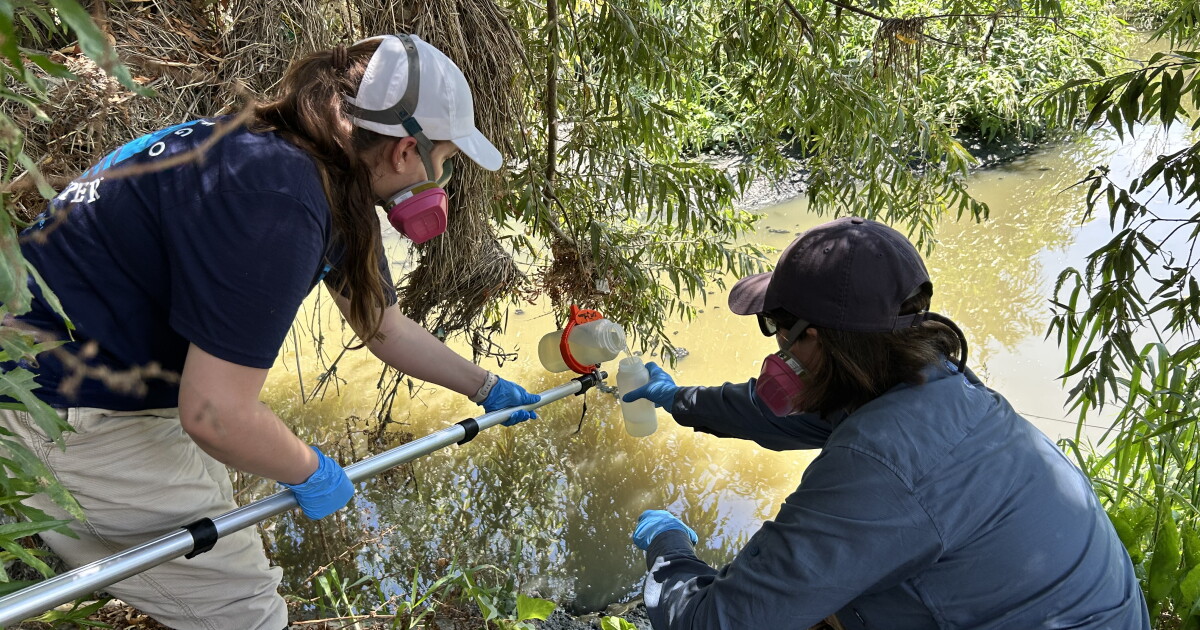
Photo: KPBS Public Media
A new San Diego Coastkeeper report documents severe sewage, chemical, and metal pollution in the Tijuana River watershed, with E. coli levels reaching up to 30,000 times federal standards. The findings reveal chronically low dissolved oxygen levels and continuous chemical inputs affecting nearby communities, the Tijuana River Estuary, and coastal waters.
Read the full story at KPBS Public MediaWhy It Matters
Residents near the Tijuana River watershed face ongoing exposure to industrial pollution and sewage contamination that impacts public health, local ecosystems, and coastal water quality.
Key Facts
- E. coli levels in the Tijuana River watershed are frequently 30,000 times higher than federal freshwater standards.
- Unidentified chemicals and industrial pollutants are continuously detected in the river water.
- Water samples have been collected monthly since November 2024 at four sites: Dairy Mart Road, Goat Canyon Sediment Control Basin, Smuggler's Gulch, and Saturn Boulevard.
- Saturn Boulevard and Dairy Mart Road showed the highest pollution levels and are located near homes, schools, and businesses.
- Copper concentrations exceeded acute federal toxicity standards in over 40% of samples and chronic thresholds in nearly 70%.
- The California Regional Water Quality Control Board requires a minimum dissolved oxygen standard of 5 mg/L, but the report recorded average yearly concentrations between 1 and 3 mg/L.
- Decades of underinvestment and inadequate wastewater treatment on both sides of the US-Mexico border contribute to the pollution crisis.
- Industrial facilities, including maquiladoras in Mexico, are identified as primary sources of the pollution.
- The report calls for expedited expansion of a border treatment plant and binational investment in wastewater recycling.
- San Diego County is launching a second public health survey with the Centers for Disease Control and Prevention (CDC) to assess health concerns and changes since 2024.
Who's Mentioned
locationSmuggler's Gulch“One of the four monthly water sampling sites.”locationTijuana Estuary“Coastal wetland where the Tijuana River flows.”OrganizationCenters for Disease Control and Prevention“Partnering with San Diego County on a public health survey.”PersonLaura Fuller“Coastkeeper's science director.”locationPacific Ocean“Destination of the Tijuana River.”locationColorado River“Tijuana's main source of water.”locationDairy Mart Road“One of the four monthly water sampling sites.”locationTijuana River“Binational river flowing from Mexico into California.”PersonPhillip Musegaas“Coastkeeper's executive director.”OrganizationSan Diego County“Announced a second public health survey regarding the contamination.”locationSaturn Boulevard“One of the four monthly water sampling sites and a pollution hotspot.”locationGoat Canyon Sediment Control Basin“One of the four monthly water sampling sites.”OrganizationSan Diego Coastkeeper“Released the report on Tijuana River pollution.”OrganizationCalifornia Regional Water Quality Control Board“Sets minimum water quality standards for dissolved oxygen.”